First December Films
How we replaced a ten-page brochure site with a 184-page Webflow build for a Mumbai production house with 10 Cannes Lions, then stayed on to make it the source Google and AI assistants cite, including an AI script analyser that turns a pasted script into a qualified lead.
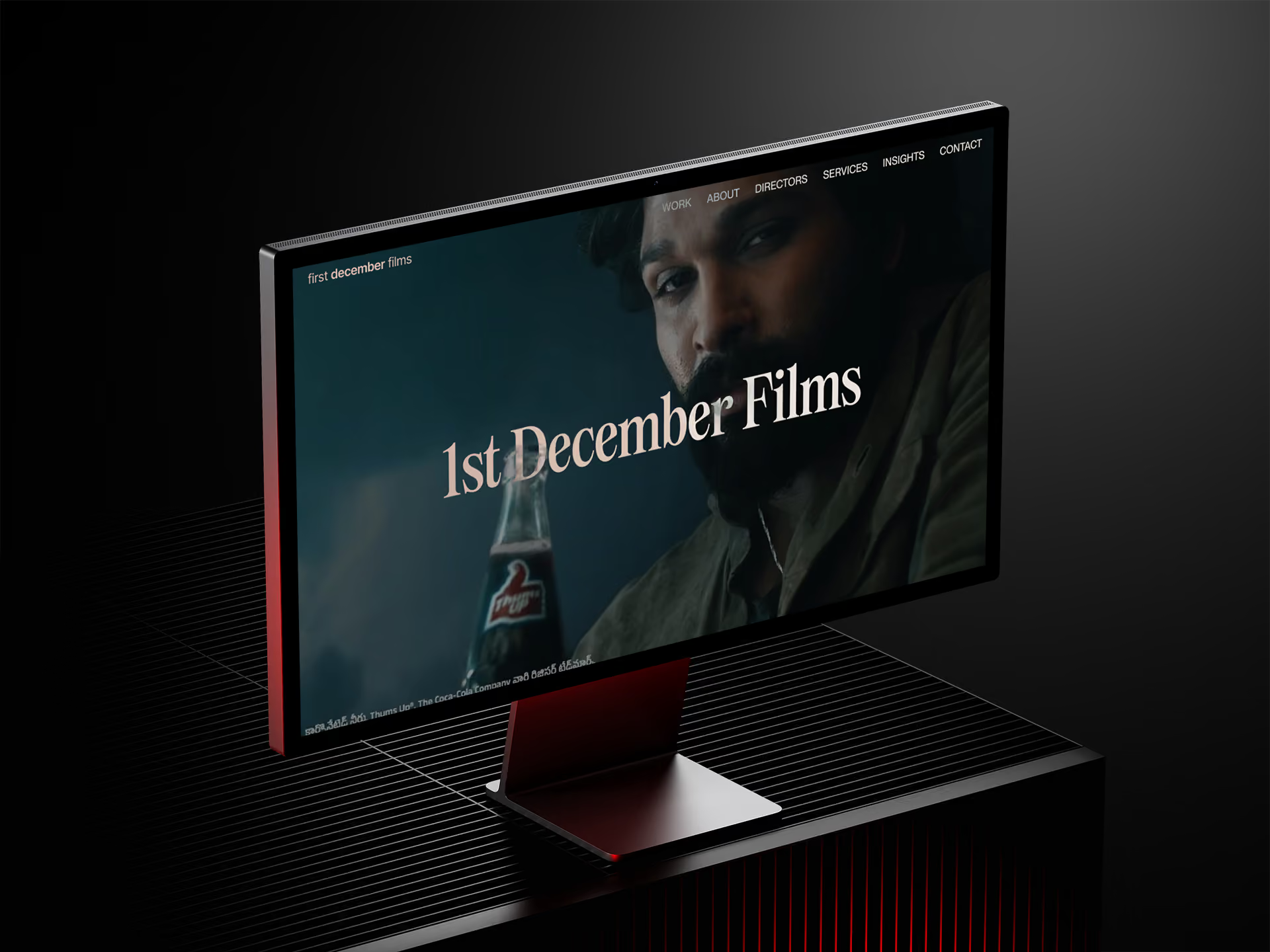
First December Films is a Mumbai advertising film house that has produced the most awarded commercial ever made in India and still had a website with no H1 tag. In summer 2026 we designed and built a new home for it on Webflow: 157 film pages, nine director pages, an itemised awards archive, a press library, a blog written by the founders and a careers section, all in one CMS the team can run.
If you run a production house, a post studio or a director roster and your website is a reel with a contact address, most of it will sound familiar.
Lighthouse SEO, accessibility & best practices, with 96 for performance (desktop)
Live URLs, up from about ten on the old site
Largest Contentful Paint on the homepage
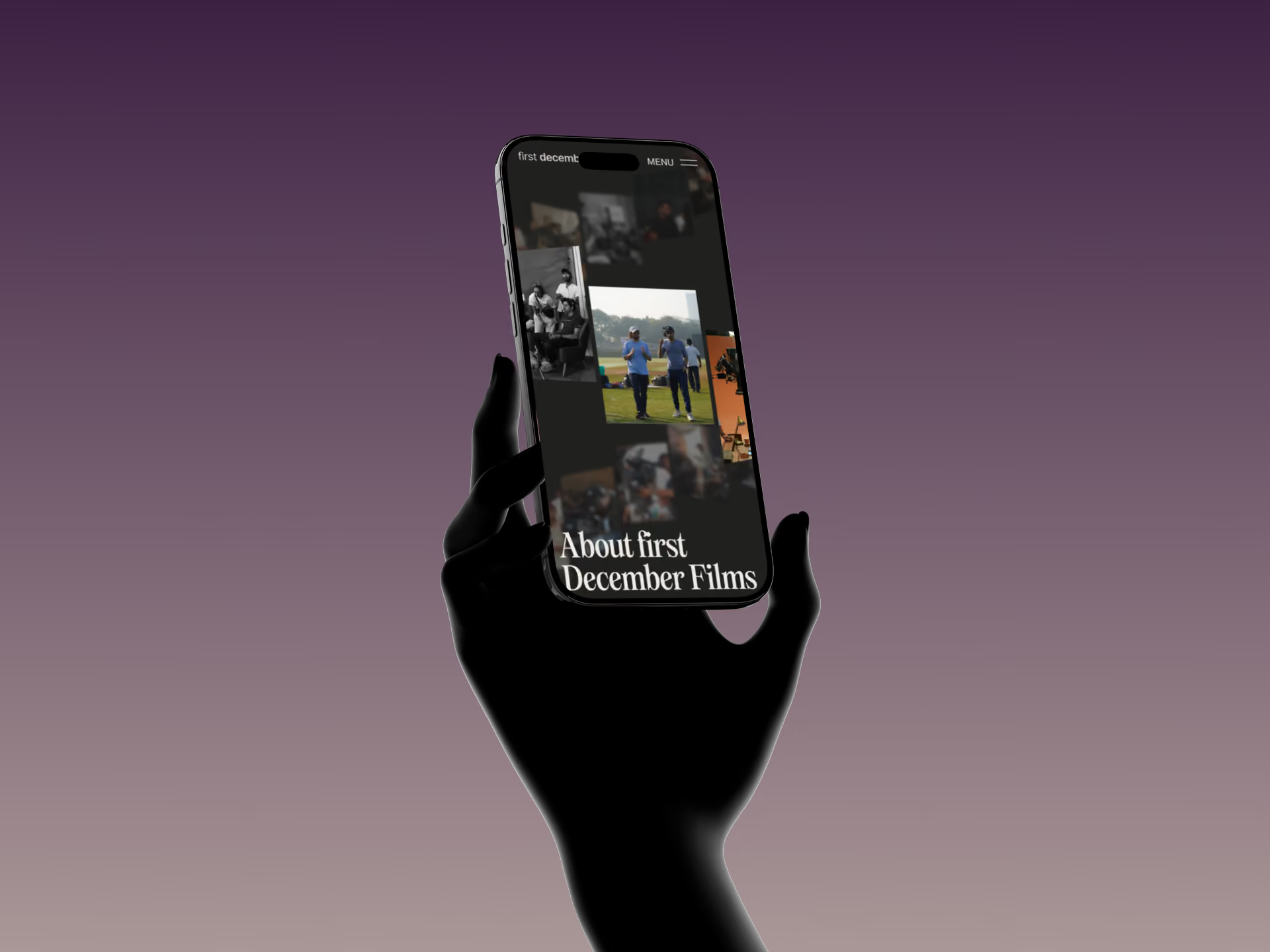
About First December Films
First December Films was founded in Bangalore in 2010 by cinematographer Anup Kattukaran and director Atul Kattukaran, and is now based in Andheri West, Mumbai. Ganesh Pareek is Partner, Executive Producer and Creative Director. Imran Patel and Ankit Singh produce.
Two films define its reputation. Nike's Make Every Yard Count (2014) stitched one continuous bowling action from 1,440 photographs crowd-sourced from 225,000 submissions and won seven Cannes Lions, a record for a single Indian film. Beauty Tips by Reshma (2016), fronted by acid attack survivor Reshma Qureshi, won the Cannes Glass Lion for Change and was covered by the New York Times, the BBC and Time. Atul Kattukaran remains the only Indian named among the ten best TVC directors in the world by the Cannes Lions Global Creativity Report.
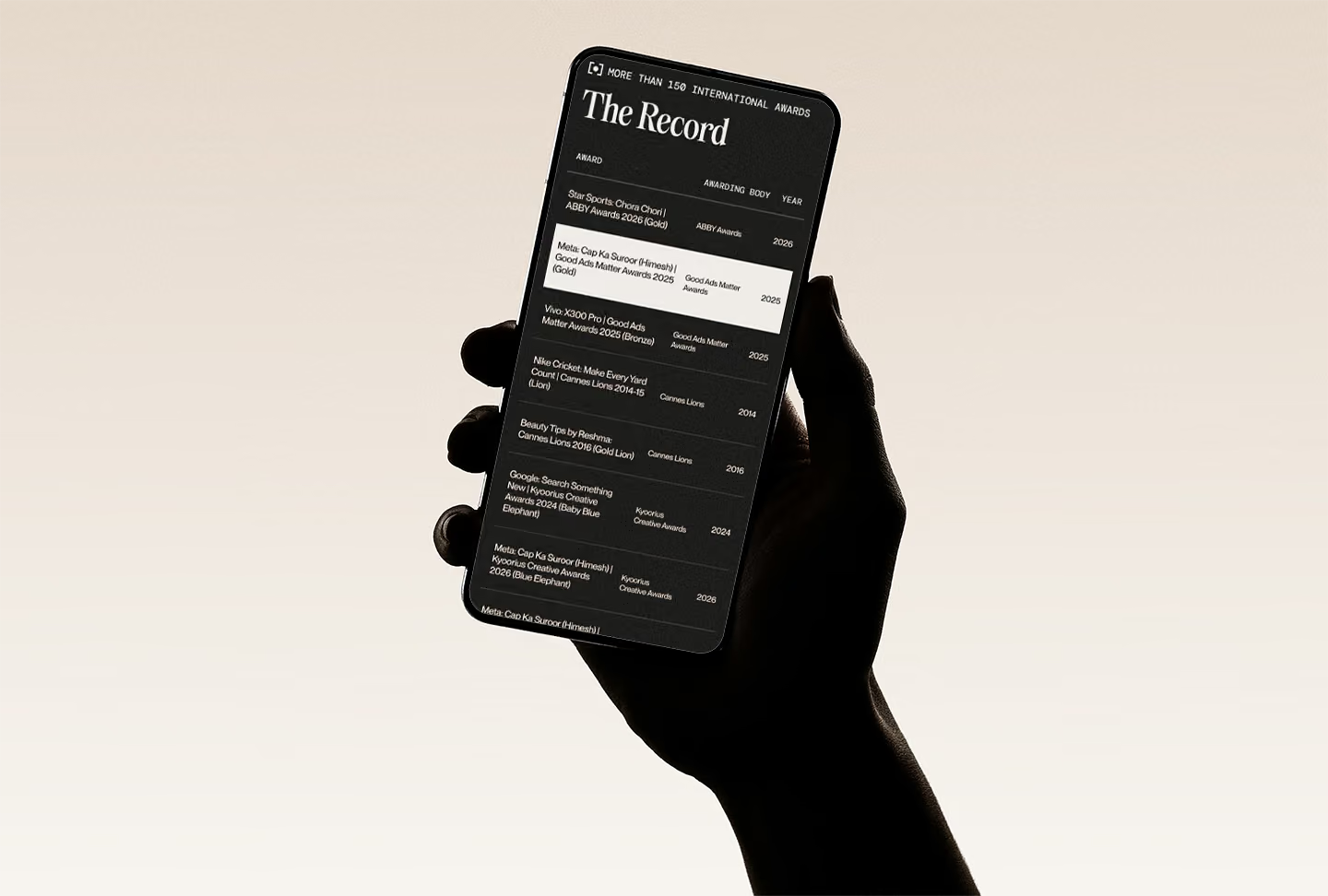
The house claims more than 150 international awards. The new awards page itemises 108 of them, including 10 Cannes Lions, 10 One Show pencils, 8 D&AD pencils, 11 Spikes Asia and 18 Kyoorius awards. It has made films for Google, Meta, Nike, Netflix, KFC, Vivo, Razorpay, Star Sports, ZEE, JioHotstar, Cars24, Swiggy and Maruti Suzuki, 61 brands in all. In 2026 alone it produced a fourteen-film Razorpay campaign and the ZEE and JioStar films for the FIFA World Cup and the T20 World Cup.
None of that was findable online. That was the brief.

The Challenge
A brochure site for a house with 10 Cannes Lions
The old 1stdecember.com was a static Bootstrap and jQuery site on a shared cPanel host. The title tag on the homepage was the single word "1stdecember". There was no H1 anywhere. The homepage carried about 500 words, most of them producers' phone numbers repeated in the header and footer. Six films lived at URLs like /description/get/77. The directors' page was called "directorsshowreel". Every film title on the page read "Brand : Director | Ganesh Pareek | First December Films", pasted from YouTube.
Ahrefs put organic traffic at 39 visits in January 2026, falling to zero by April and again in July. Domain Rating was 3. The site ranked for two keywords, both the calendar date "1st december", and every visit came from people looking for a date, not a production company. For the queries the house actually wants, "ad film production house in Mumbai" (210 searches a month in India) or "tvc production house india", it did not appear at all.
The organic engine in this category is the director page
We ran the competitor analysis before we pitched. Six houses were compared on Semrush and Ahrefs in June 2026: Smuggler, MJZ, Iconoclast, Revolver, Early Man Film and First December. Smuggler captured 82% of the group's organic traffic. MJZ took 14%. First December was under 1%, a rounding error. The gap was roughly 20 times on authority and 100 to 500 times on ranking keywords.
The keyword gap told the real story. Every single keyword the competitors ranked for and First December did not was a director's name. In this niche a buyer searches for a director, the production house's director page ranks, and the buyer discovers the house through the talent. First December had Atul Kattukaran and no indexable page for him. Iconoclast proved the point the other way: it ranks for 467 keywords off just 21 referring domains, because its director and work pages are structured and crawlable. The win was architecture, not links.
Junk links and no way to measure
The one line moving on the old site's charts was referring domains, up by 113 in two months. That was a red flag, not a win. Authority fell while domains spiked, and the link profile was full of .top, .xyz and .pages.dev domains, with 106 of 196 referring pages on blogspot.com. Somebody had pointed cheap links at the site and it was doing nothing. The spam score, at 47, was the highest of any craft peer we measured.
There was no analytics that anyone looked at, no Search Console anyone checked, and no way to know which channel a lead came from.
The team could not publish
A new film, a new award, a director joining the roster, a press mention: each one needed a developer, so none of them happened. The archive had 156 films and the website showed six.
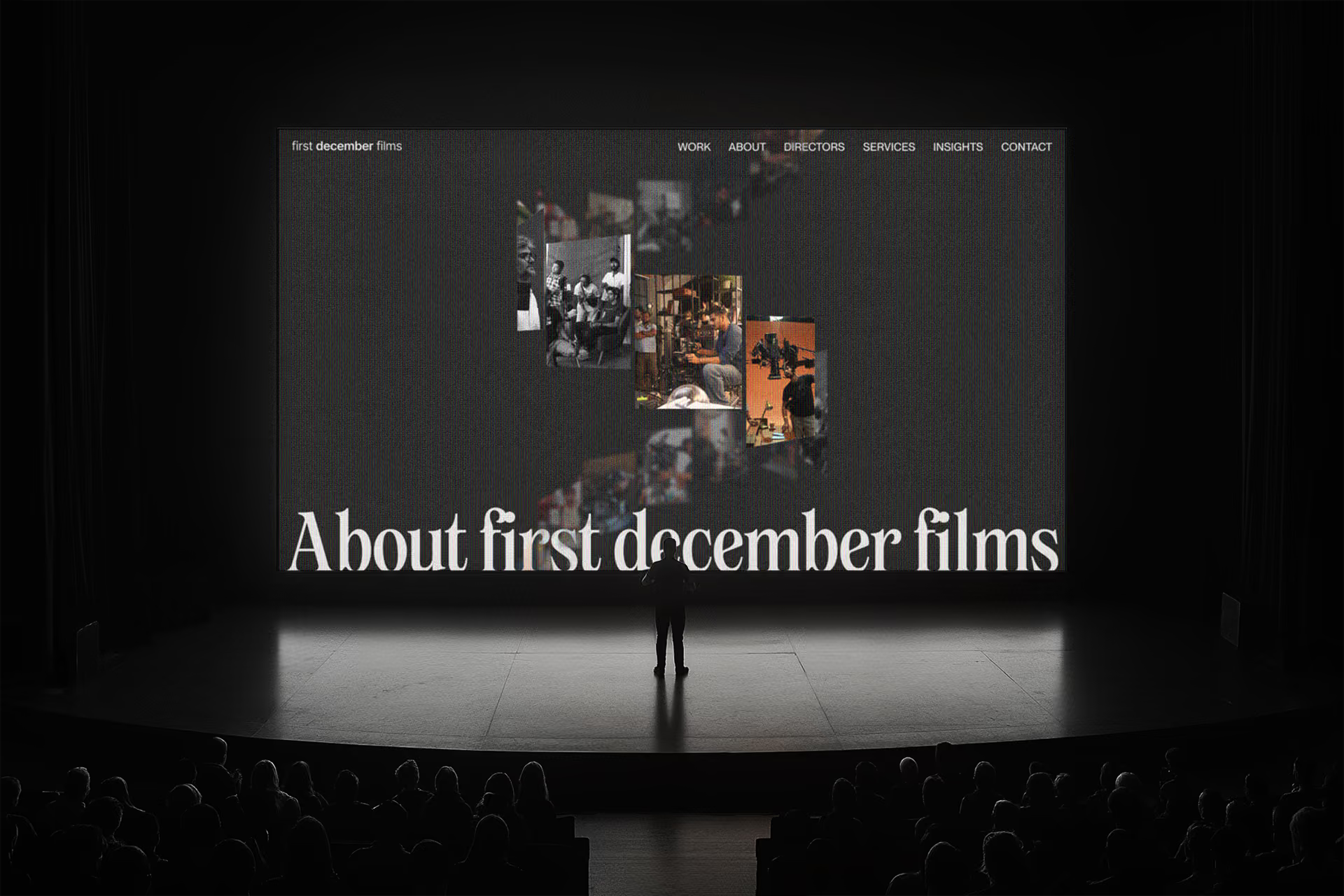
What we were asked to build
- A new brand website on Webflow, designed in Figma first: home, work, film template, directors, director template, about, awards, press, behind the scenes, blog, careers, contact and legal pages.
- A CMS the producers could run: films, directors, awards, brands, press, festivals, industries, services, team, careers, blog.
- Migration of every old URL with redirects, and the search and AI groundwork so the site could be found and cited.
- Then, as a retainer: content, technical SEO, answer engine and generative engine optimisation, link building and PR, with reporting the founders could read in five minutes.
How we approached it
The design and build ran in the order we run every site. The retainer started the week the site went live, because a launch is the best moment to start earning links.
Design: let the work do the talking
An ad film house sells taste. The website's job is to get out of the way of the films and make the credentials impossible to miss.
Brand language
The site opens on a full-bleed film still with a serif wordmark across it and a single word, Menu, in the corner. Everything else is dark, quiet and typographic. Headings reveal line by line as you scroll, the menu slides the whole page aside rather than dropping over it, and the footer parallaxes in. Motion is there to feel like cinema, not to decorate.
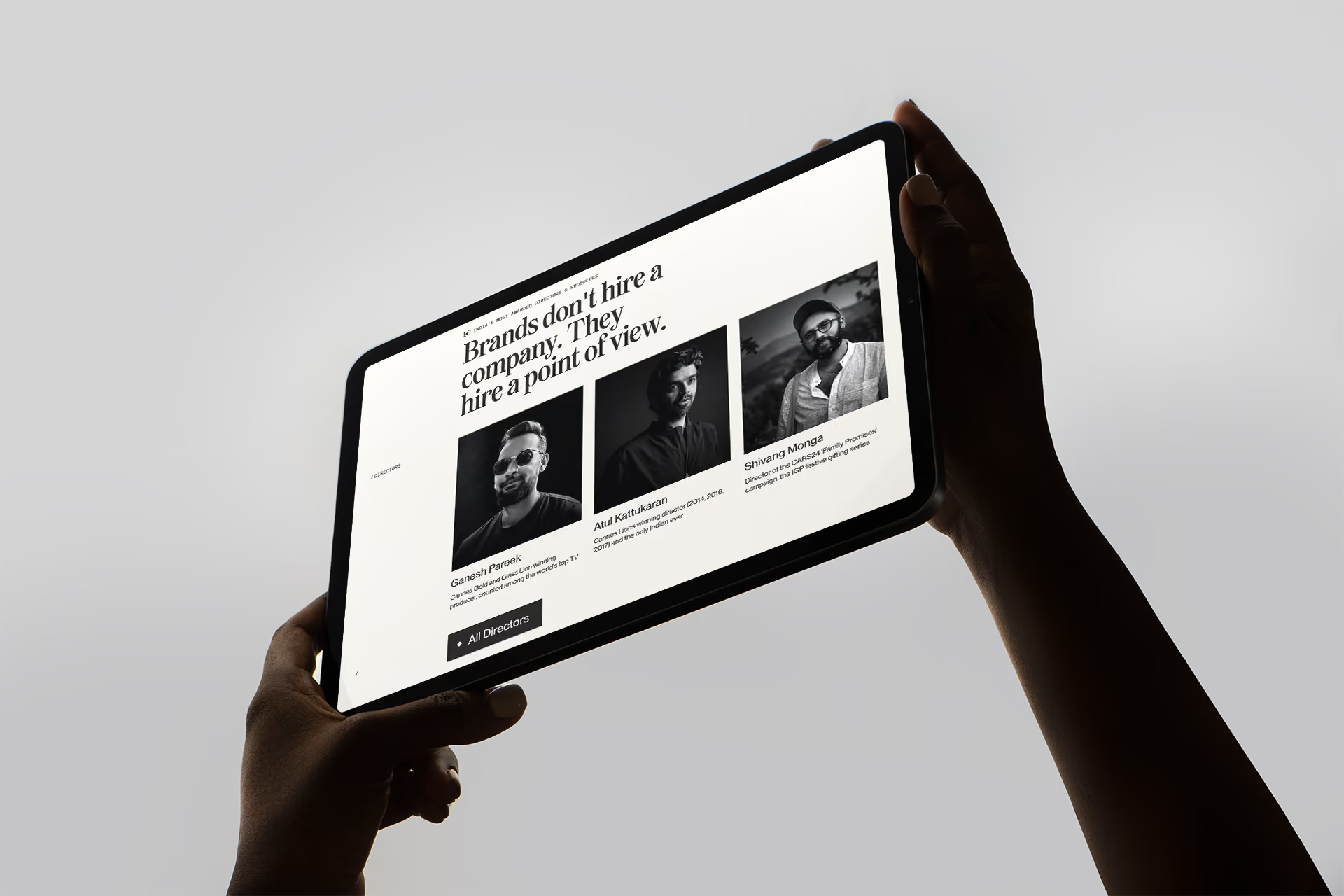
The copy was written to sound like a producer, not an agency. "The one film a brand builds its year around." "Brands don't hire a company. They hire a point of view." "Premium isn't a look. It's a hundred decisions, made by people who've made them before." The about page opens with a line the founders liked enough to make a heading: "Taste is the whole business. Everything else is just equipment."
Homepage
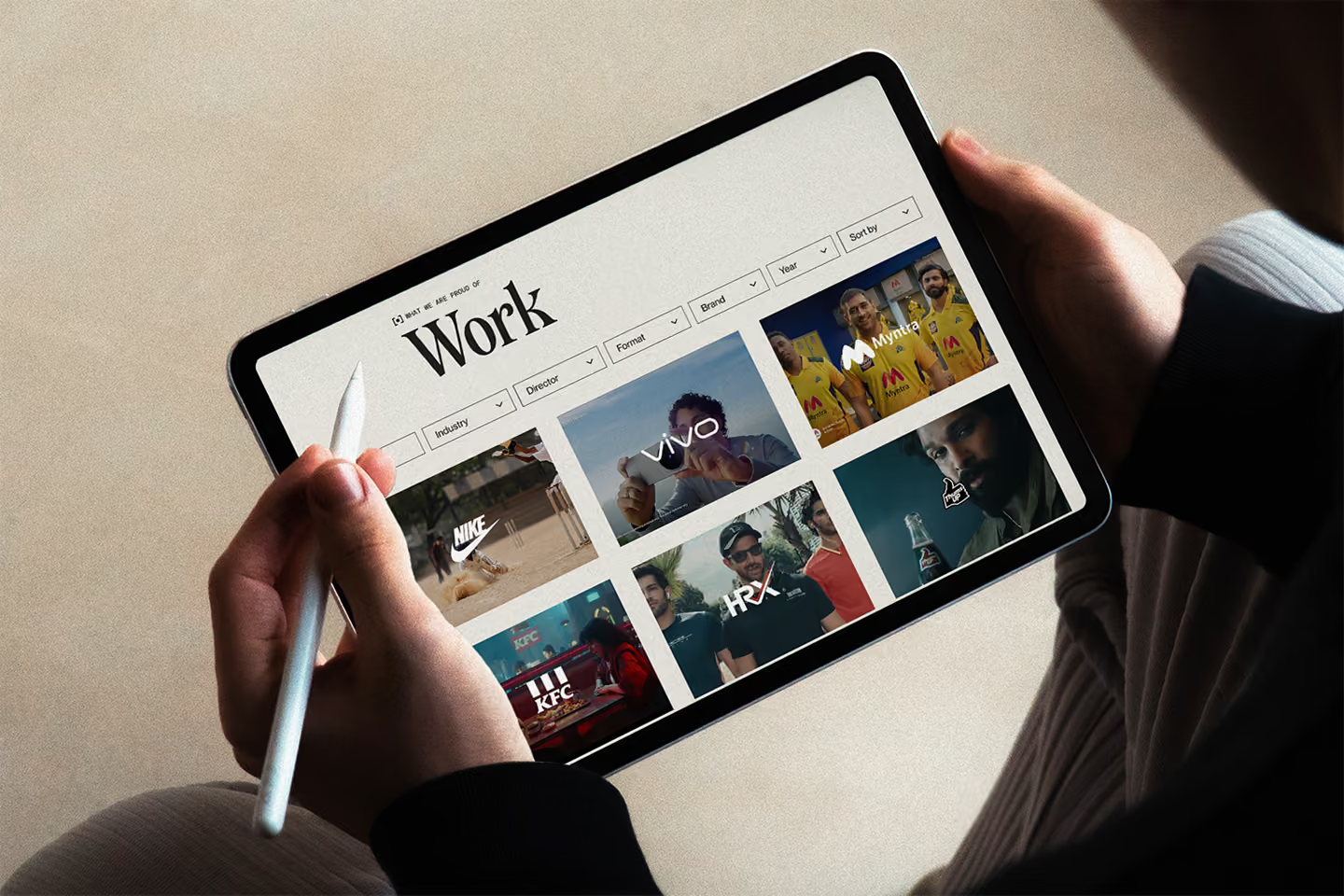
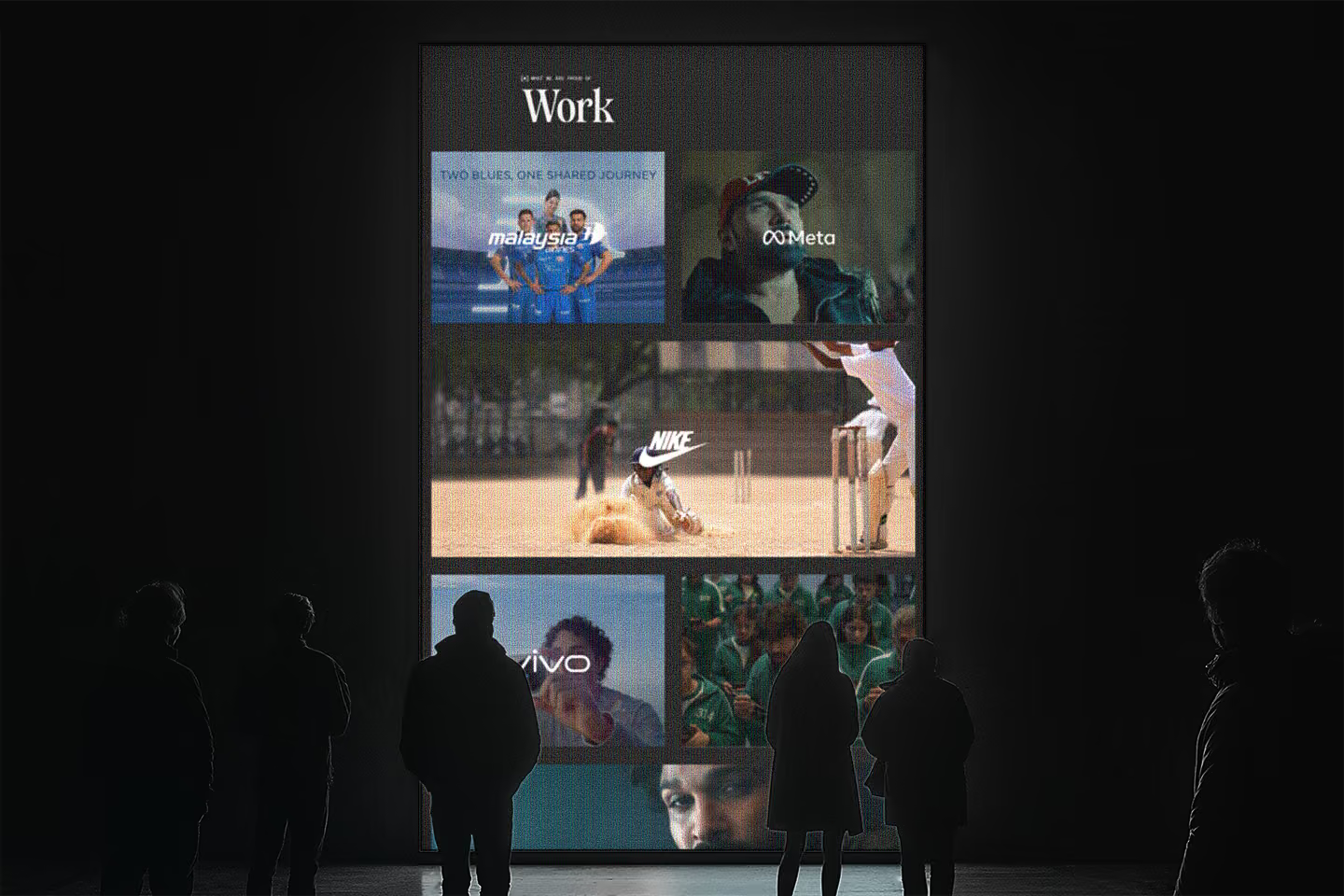
Seven numbered sections. Intro, featured work with client logos, the directors, the awards count, an "As featured in" wall (BBC, the Guardian, the New York Times, the Wall Street Journal, Time, Adweek, Ad Age, Campaign), the festivals the house has won at, and a wall of a hundred brand logos under the heading "In good company". Every section ends with a link into the corresponding CMS collection, so the homepage is a table of contents for the archive rather than a dead end.
The film page
This is the page that has to do the selling, and the page the search strategy depends on, so it got the most design time. In order: the film, playable in place. Brand, director, agency, year, format, industry and duration at a glance. Awards won, pulled from the awards collection. A case study body for the films that have one. Full credits. A director spotlight with a link to the reel. Six FAQs written for the questions a client would ask (who directed it, who is in it, what it won, how it was made). Related work, and one call to action: "send us a script and a date".
Director pages
Bio, showreel, a grid of every film the director has made for the house with the client's logo on each tile, the awards, and links to Vimeo, Instagram, LinkedIn and IMDb. Atul Kattukaran's page carries about 30 films. This is the page type the competitor analysis said would carry the category, so each one has its own meta title, description and Open Graph image fields.
Mobile
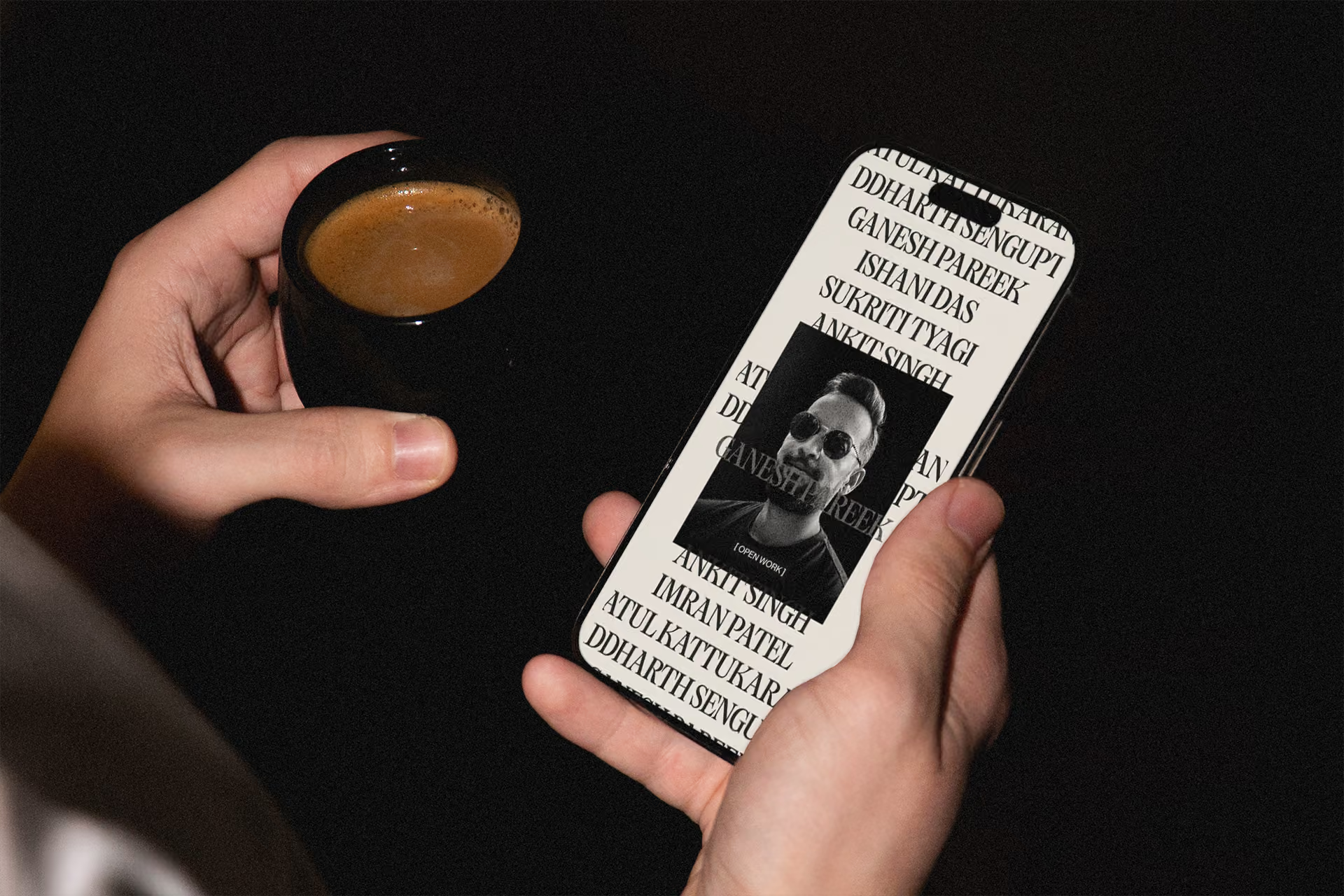
Films are watched on phones. The hero still is cropped for portrait, the menu becomes a full-height panel, the film grid is a single column with the video playable inline, and the producers' phone numbers on the contact page are tap-to-call. Nine of the sixteen attributed leads in the first week of tracking came from a phone.

Webflow development and the CMS
The site is a Webflow build with custom code for the navigation, text reveals, smooth scrolling and the video player, and a separate Webflow Cloud app for the script analyser. The CMS is where most of the thinking went.
Twelve collections, 475 items
- Works: 161 films, 157 live. About 50 fields per film: client, campaign, agency, year, duration and an ISO duration for structured data, YouTube and Vimeo links, Bunny CDN thumbnail, three logo variants, a rich text case study body, an impact block, full credits, six FAQ pairs, meta title and meta description, and references to directors, awards, press, team members, brands, services and industries.
- Directors: 12 items, 9 live, each with a short bio, a full bio, a black and white portrait, a showreel, social links and its own SEO fields.
- Awards: 69 entries itemising 108 awards, each with the awarding body, the metal, the category, the year, a count and a link to the award page.
- Brands (61), Press and Media (43 articles with publication logos and dates), Festival Shows (14), Behind the Scenes (52 on-set photographs), Industries (18), Services (12), Teams (5), Careers (3 live roles) and Blogs (3 posts, each with seven FAQ pairs, an author bio and a read time).
Every collection carries meta title and meta description fields with helper text ("keep under 60 characters", "aim for 140 to 160"), so the person adding a film writes its search snippet at the same time. There is no page on the site without a unique title and description.
Filters and the honest limitation
The work page filters by service, industry, director and brand through an 18-field filter form. One limitation is worth stating plainly: Webflow renders at most 100 items in a collection list, so the grid shows about 94 films and the rest are reachable by direct URL, from director pages, from related work and from search engines. The script analyser's index now covers all 161, and a plain-language catalogue search built on it is on the roadmap.
Migration
Ninety-three 301 redirects map every old URL to its new home, including the capitalised variants the old server tolerated. The 188 new URLs were pushed to Bing through IndexNow in two batches on launch day, and Bing Webmaster Tools was verified in the site head. The new site sits behind Cloudflare with a five-day edge cache and an average server response of 182 milliseconds.
Guardrails for a non-technical team
- Unpublish, never delete, for retiring a film or a director. Three archived directors return a 404 by design and are never linked.
- A single credits document and a single awards sheet, both in the client's Google Drive, are the sources the CMS was filled from, so a dispute about a credit has one place to go.
- Forms route by purpose. Contact enquiries go to the producers, applications go to careers, script analyses go to four inboxes at once.
Content: 17 film case studies and a blog the founders wrote
A production house's authority is its filmography, so we treated the archive as the content programme.
Seventeen films now carry long-form case studies of 1,100 to 1,600 words: Nike, Beauty Tips by Reshma, Malaysia Airlines, Cars24, Meta, Gemini, JioHotstar, ZEE x FIFA, Knorr x Netflix, Thums Up, Swiggy, Vivo, Fiama, MuscleBlaze, NEXA, Unacademy and Wonderla. Each one was researched the slow way: the film was downloaded and watched frame by frame, the dialogue transcribed, the brand's own upload located for the launch date, the press read for executive quotes, and the awards verified against the awarding bodies. A notes file beside each one lists every inference we left out. A checker script fails the draft if it contains a dash, a disallowed tag, an apostrophe in a FAQ answer or the wrong word count.
The blog launched with three posts, each with the founder's name on it: Ganesh Pareek on what each budget tier of an Indian ad film actually buys (2,200 words, seven FAQs, the closest thing the house has to a data asset), Atul Kattukaran on how to choose a director, and Imran Patel on how a TVC gets made from brief to broadcast. They are written to be cited, which is why each answers the questions a marketer types into a search box or an AI assistant.
SEO, AEO and GEO: Make the site the source
The starting point was a DR 3 domain that ranked for a calendar date. We are not going to show a traffic chart three weeks after launch. What we did was make 1stdecember.com the easiest source in its category for Google and for AI assistants to understand, so that authority has somewhere to land as the retainer earns it.
An entity graph, not a snippet
Every page carries a schema graph. The Organization node names the house, its founders, address, coordinates, phone, email, founding date and what it "knows about", with sameAs links to YouTube, Instagram, Vimeo and LinkedIn. Each film page is a VideoObject with the house as production company and the brand as sponsor, the ISO duration and the thumbnail. Each director page is a ProfilePage around a Person who works for the organisation. Each blog post is a BlogPosting with its author as a Person, a FAQPage of seven questions and a speakable specification. The contact page carries four ContactPoints with named producers. The script analyser page is a WebApplication with a feature list and its own FAQPage. This is what lets an AI engine answer "who produced Nike Make Every Yard Count" or "ad film directors in Mumbai with a Cannes Lion" with a real name and a real link.
Built to be read by AI crawlers
- A robots.txt that allows search engines and AI crawlers (GPTBot, ClaudeBot, PerplexityBot, Grok and the rest), allows link-preview bots, and blocks scrapers and competitor SEO crawlers.
- An llms.txt of 268 lines that states the facts a model needs in one place: founding, founders, awards, directors, notable films, brands, contact details.
- Answer-shaped content everywhere: six FAQs on every film with a case study, seven on every blog post, nine on the script analyser page.
- A row of "ask an AI about this page" buttons in the footer that open ChatGPT, Claude, Perplexity, Grok or Google AI Mode with the prompt already written: visit this URL and tell me what First December Films does, who it is for and why I should work with them. It costs nothing, and it teaches assistants to read the site.
Classic hygiene
Canonical URLs, unique titles and descriptions on all 184 URLs, Open Graph images on every template, a sitemap of 184 URLs, staging excluded from indexing, and images served from Webflow's CDN with responsive sizes. Lighthouse on the homepage, measured on 6 September 2026 with Lighthouse 13.4 on desktop: performance 96, accessibility 100, best practices 100, SEO 100, and 100 in the new "agentic browsing" category that checks a site can be used by AI agents. First Contentful Paint 0.98 seconds, Largest Contentful Paint 1.05 seconds, layout shift 0.021, interactive in 1.05 seconds. The page weighs 2.9 MB, almost all of it the film stills, which stay because they sell films.
Knowing which channel sent the lead
Every form on the site writes fourteen hidden fields into the submission: lead source, first touch, last touch, five UTM parameters, click ID, referrer, landing page, the page the form was submitted from, visit count and device. First touch is written once and never overwritten. Last touch is the last non-direct click, so a lead who came from a LinkedIn post, left, and returned by typing the URL is still credited to LinkedIn. It runs in 4.6 KB of head code with no third-party tool and no monthly fee.
The part that matters for 2026: the script classifies chatgpt.com, perplexity.ai, claude.ai, gemini.google.com and copilot as an "ai" channel, separate from organic search and social. Most analytics setups lump those into referral traffic or lose them. Similarweb's 2026 dataset has AI referral visits up 117% year on year with every tracked industry at least doubling, and SE Ranking counted the number of domains receiving at least one ChatGPT referral rising from 71,000 to 260,000 between January 2025 and January 2026. If your forms cannot tell you when that happens to you, you will keep spending on the wrong channel.
It happened to First December in the first week. Of the 16 real applications that arrived with attribution between 30 August and 5 September, 15 came from chatgpt.com. Candidates asked an assistant where to apply for assistant director roles in Mumbai and were sent to 1stdecember.com/careers. Those are job applications, not client enquiries, and we say so. But it is proof that the site is already being read and recommended by an AI engine, three weeks after launch.
The script analyser: a lead magnet that behaves like a producer
Production houses get scripts, not enquiry forms. A brand or an agency with a script in hand wants a read on it before they call anyone. So we built a tool at 1stdecember.com/script that gives them one, grounded in the films the house has actually made.
Paste a script or a brief, enter an email, and in about a minute the analysis streams onto the page in seven sections: the read (what the script is and the one thing it needs to land), a beat sheet, a runtime and format estimate with the reasoning shown, a production breakdown with a complexity band (contained, standard or complex), three comparable films from the First December catalogue with a sentence on why each is comparable, two directors from the current roster tied to two credits each, and what a producer would push on before the first call. The house receives the script, the analysis and the full attribution payload at the same moment.
Webflow Designer page at /script
The page itself: copy, sections, FAQ and SEO owned in the Designer. A 1 KB embed loads the engine.
Webflow Cloud app at /analyser (Astro 7 on the Cloudflare Workers runtime)
Validates input, rate-limits, runs a SQL pre-filter over the catalogue, makes one streaming call to the Claude API, tees the result to the database and notifies the team.
D1 (SQLite) and KV
D1 holds the index of 161 films and 9 directors and the enquiry log. KV holds rate-limit counters, three analyses per email and ten per IP per day.
Claude API with prompt caching
The candidate films travel as a cached block, so a warm analysis costs about $0.12 and a cold one about $0.33. Building the whole index cost $4.22.
Webflow native form plus Brevo
The submission lands in the site's Forms tab with all fourteen attribution fields, and a notification goes to four producers' inboxes.
The SEO/AEO/GEO and Webflow Retainer: What a month looks like
The build is a fixed-scope project. The retainer is a six-month minimum engagement with content included, and it started the week the site went live.
Month one: technical base and quick wins
Broken links, canonicals, the sitemap and robots, the meta pass, alt text on every asset, Search Console and Bing set up, the rank tracker loaded with 49 buyer keywords (ad film production house in Mumbai, TVC production house India, best ad film directors in India, the three founders' names and the brand variants), and an Ahrefs project tracking 196 keywords against seven benchmark domains including MJZ, Smuggler and Early Man Film.
Months two to four: content that captures demand
The clusters we mapped in the proposal carry a combined search volume of about 155,000 a month: director pages (75,000 plus), work and campaign pages (40,000 plus), TVC, brand film and digital film production (25,000 plus) and awards and credibility (14,800 plus). The programme publishes into those clusters: more film case studies, service and industry pages, guides, and structured internal links so a film page passes authority to its director and its brand.
Links and PR: claim the credits first
The competitor link matrix showed where premium links come from in this niche: creative-industry press, festival and award bodies, and curated work galleries. Not generic guest posts. First December's awards record is the key that unlocks most of them.
So the outreach programme starts with credit fixes. Sixty domains are qualified in a tracker with tier, relevance, DR, traffic, contact and the specific hook: Brand Equity (DR 92), Ad Age and Adweek (90), the Drum (88), Little Black Book (84), D&AD (80), One Club (79), Campaign Asia and afaqs, Social Samosa, MediaBrief and the Indian trade titles that have already covered the house. The first five emails are credit fixes, each under 120 words with one ask: an award entry that lists the agency and the director but no production company, a 2,000-word interview with the founder that names the house ten times and never links it, a making-of piece that says the house "reportedly" turned the production around in two days. Every claim in every email was verified by fetching the page the same day.
Before a single email went out we audited the sending domain and found that Google Workspace mail would soft-fail SPF, there was no DKIM key and no DMARC policy. The drafts are held at the review gate until the three DNS records are live and a two-week warm-up is done. Sending 200 outreach emails a month from an unauthenticated cold mailbox would have burned the domain's reputation before it earned a single link.
The PR plan runs from October 2026 to March 2027 with a story bank, a findings log and a verified-facts sheet, and a target of 200 emails a month with follow-ups on day 4 and day 10.
Reporting
One page a month: impressions, clicks and leads, split brand and non-brand, rankings for the 49 keywords with what moved and why, AI citations, links placed, and next month's plan. The founders should be able to read it in five minutes.
Results so far
Three weeks after launch the honest results are structural and operational. Search results and client enquiries belong in a later update, and we will add them here when they are real.
About 10
184
6
157
0
9
0
108 across 69 entries
None
Organization, VideoObject, Person, BlogPosting, FAQPage, WebApplication graphs
72
Performance 96, accessibility 100, best practices 100, SEO 100
Not measured
LCP 1.05 s, CLS 0.021, TTI 1.05 s
0
17 film case studies, 3 founder-written posts
Who this is for
- Ad film production houses and TVC studios whose reel lives on Vimeo and whose website is a phone number.
- Director rosters and representation companies, where each director's page needs to rank for the director's name.
- Post-production, animation and VFX studios with a deep archive of credited work that is invisible to search.
- Video production companies anywhere that want enquiries to arrive already qualified, with the script attached.
- Creative agencies that need their work pages to be the source AI assistants cite when a brand asks who made a campaign.
What made it hard
- Thin data on 156 films. Client, campaign and year were filled for every film. Agency was there for 81, full credits for 31, a case study for 16. The script analyser had to be indexed from YouTube metadata as well as the CMS, or it would have recommended the same three films to everyone.
- Claims versus records. The site says 150 plus awards and 165 films. The CMS itemises 108 awards and 161 films. We publish the claim on the client's pages and the itemised number wherever we speak for the house in outreach.
- A platform cap. Webflow renders 100 items per collection list, so the work grid cannot show all 157 films. The fix is a catalogue search on the analyser's index, not a hack.
- A hosting split. The website moved to Webflow but the DNS stayed at the old cPanel host, which is where the SPF, DKIM and DMARC fixes have to happen.
- Two builds of one page. The client rebuilt the script analyser page in the Designer to his own design, which was the right call for ownership, and the rebuild dropped the head code and one element ID. Both were restored through the API within the hour and the incident is now a checklist item.
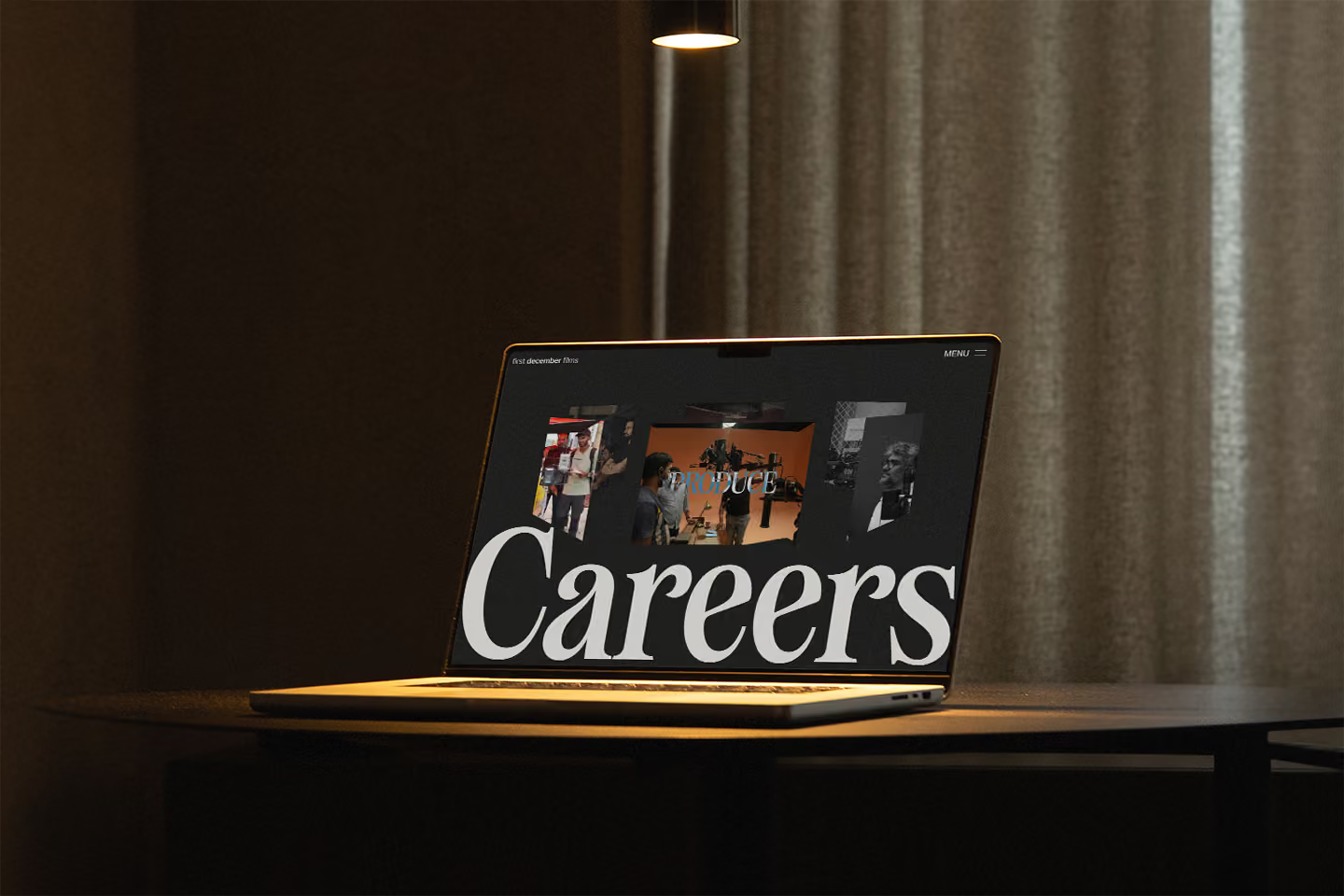
We prioritize seamless user experiences across all devices by implementing responsive design principles. By ensuring that the website adapts fluidly to various screen sizes and orientations, including mobile devices, tablets, and desktops, we guarantee accessibility and usability for all users.
If you run a production house, a post studio or a director roster and your website is a reel with a phone number, talk to us. We will show you the First December Films CMS and the script analyser's admin log live, and tell you honestly whether your archive is deep enough to be worth the same treatment.


Next Case Study
GoFIGR
Let’s create something out of this world together.
Have a project in mind? Contact us for expert design and development solutions. Let's discuss how we can help grow your business.

Hi, I’m Divyansh - Founder at Webyansh. Schedule a call with me to discuss in detail about your project and how we can help your business. You can also request for free custom quote if the scope of work is clear.