Astro Development Agency for Sites That Win Google and AI Search
Webyansh designs, builds and migrates Astro websites for B2B SaaS and content-led teams. You get fast static pages, clean HTML that AI crawlers can read, and a CMS your marketers will actually use. One accountable senior partner runs it from brief to launch.
B2B and SaaS teams who trust Webyansh with their websites


Your Marketing Site Should Not Run Like a Web App
Astro is an open source web framework for content-driven websites. It sends finished HTML to the browser and adds JavaScript only where a page needs it. Teams move to it when their current stack starts costing them speed, rankings or release time.
Too much JavaScript
Pricing pages and blog posts carry an app runtime they never use. Mobile visitors pay for it.
Plugin and patch debt
Every WordPress update puts a page that earns pipeline at risk.
Slow marketing releases
Copy changes queue behind product sprints because the site lives in the app repo.
Unread by AI crawlers
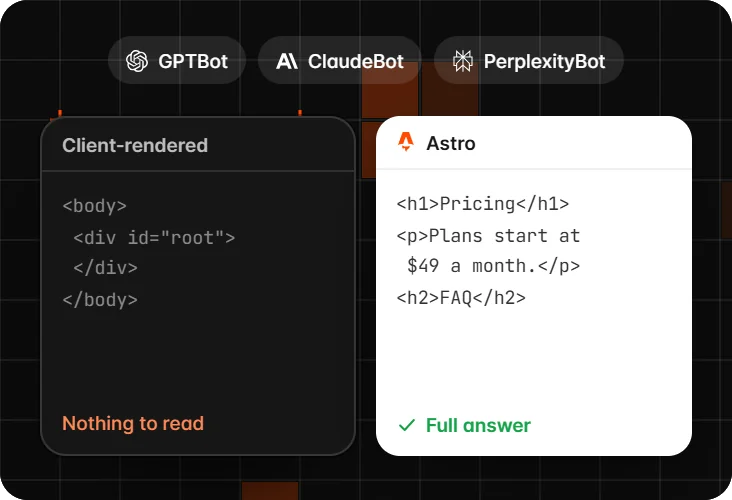
Major AI crawlers fetch HTML but do not run JavaScript, so client-rendered copy can go unseen.

Is Astro Actually Faster? Here Is the Field Data
Core Web Vitals measure what real Chrome users experience. In September 2026, 71% of Astro sites passed on mobile, against 48% of WordPress sites and 36% of Next.js sites.
| Stack | Pass Core Web Vitals, mobile | Pass Core Web Vitals, desktop | Median page weight, mobile | Median JavaScript, mobile | Sites measured |
|---|---|---|---|---|---|
| Astro | 71% | 85% | 1.36 MB | 409 KB | 49,450 |
| Webflow | 71% | 83% | 3.48 MB | 926 KB | 60,687 |
| WordPress | 48% | 54% | 2.72 MB | 677 KB | 2,714,694 |
| Next.js | 36% | 57% | 2.17 MB | 822 KB | 404,724 |
These are averages across every site on each stack, so they show what a stack tends to produce, not what one build will score. Webflow ties Astro on pass rate, which is why we still recommend it for many teams.
Sources: HTTP Archive Technology Report, September 2026 data. AI crawler behaviour: Vercel and MERJ, December 2024. Reviewed by Divyansh Agarwal, Founder and CEO of Webyansh, on 31 October 2026.
What a Webyansh Astro Build Delivers
Speed is the start. The build also has to rank, get cited and stay easy for your team to change.
Pages that load first
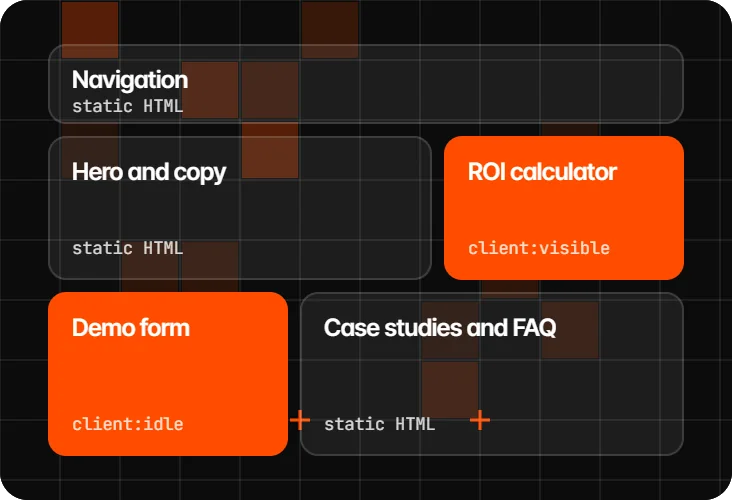
Static HTML served from the edge, with images sized and compressed at build time.
Islands, only where needed
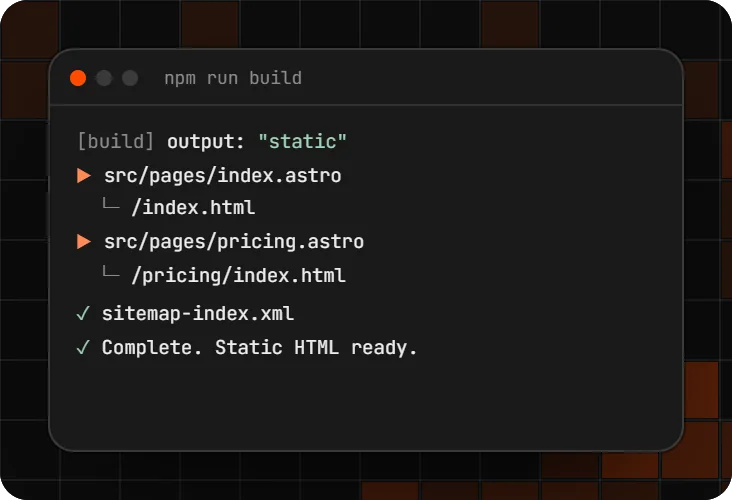
Forms, calculators and pricing toggles load their own JavaScript. The rest stays plain HTML.
Readable by AI crawlers
Copy, schema and llms.txt ship in the HTML, so crawlers get the full answer without running a script.
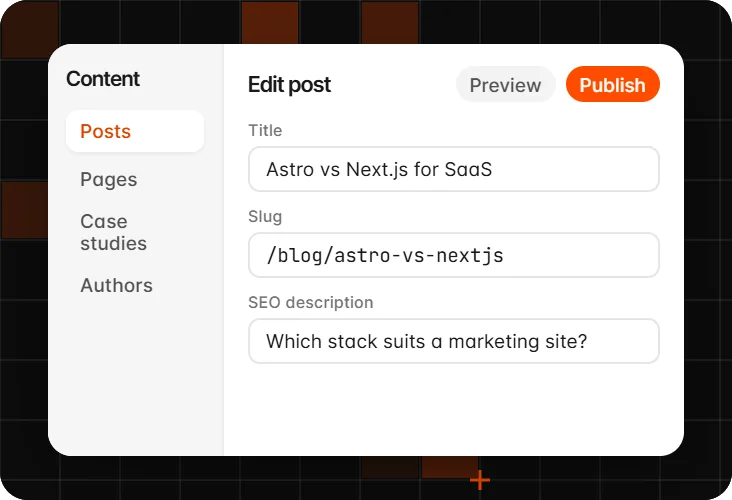
A CMS your team will use
Sanity, Storyblok or Stacki Studio with previews and typed fields. No developer needed for a new post.
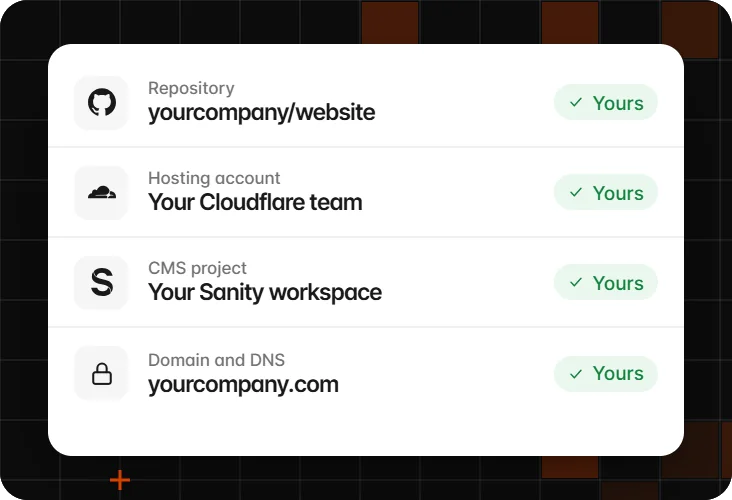
Code you own
Your repo, hosting and CMS stay in your name. Astro is MIT licensed, so nothing ties you to us.
Not sure Astro is the right call?
Book a call. We will tell you plainly, even if the answer is Webflow.

The AICE Framework™, Built Into Your Astro Code
Most Astro agencies stop at a Lighthouse score. We treat search and AI visibility as part of the build, so authority, indexing, citations and entity data live in your templates, not in a backlog.
A
Proof on every page
Author bylines, dates, case data and sources sit in the content model, so every template carries trust signals.
I
HTML first
Static HTML, clean URLs, sitemaps, canonicals and redirects ship with the build and stay tested.
C
Quotable by AI
Answer-first blocks, FAQ and comparison markup, and JSON-LD generated from your content collections.
E
One clear entity
One Organization entity, consistent sameAs links and a generated llms.txt, so engines connect the work to your name.
Astro Projects We Have Shipped
Two Astro builds are live on a client's domain. A third, a full site rebuild, is in pre-launch.
An AI script analyser for a Mumbai ad film house, running on the client's own Webflow domain.
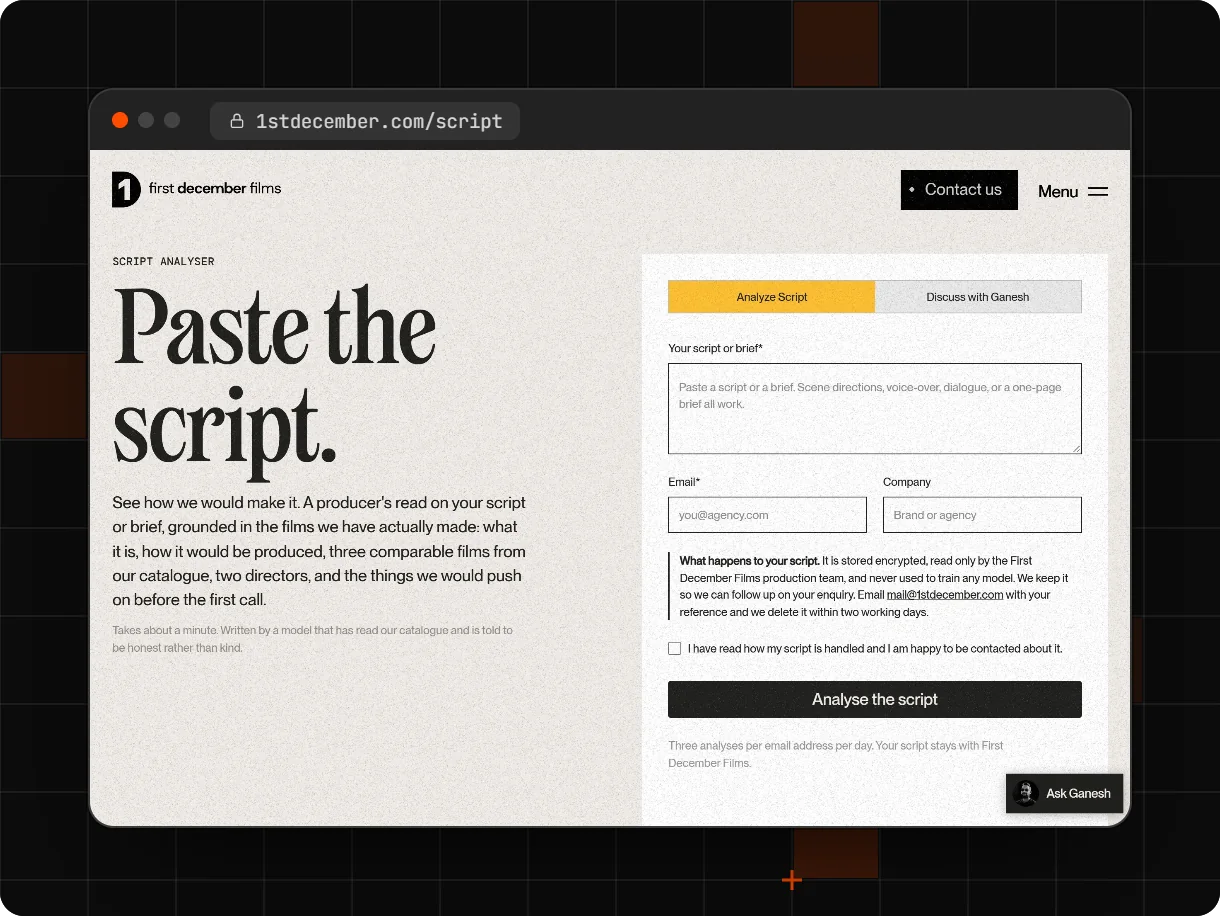
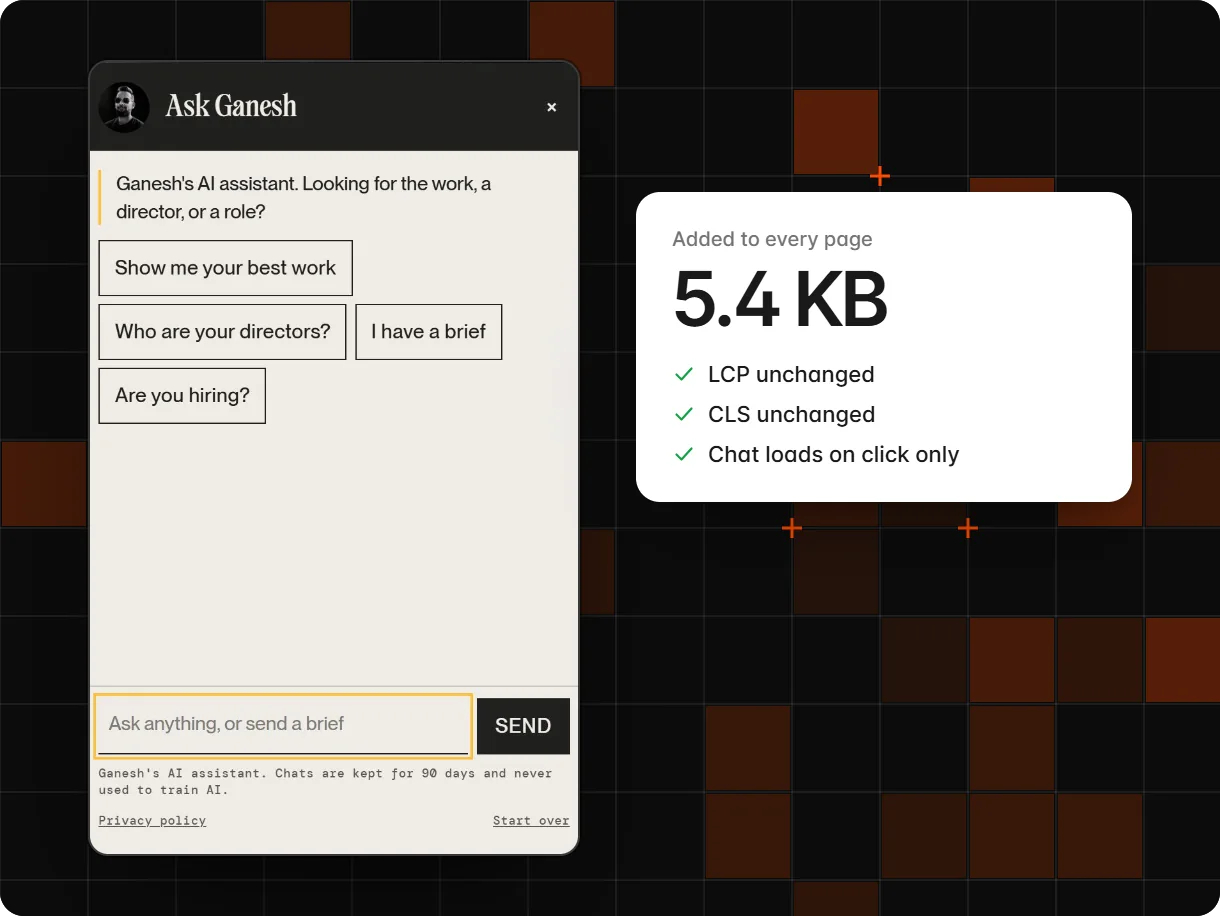
A site-wide AI assistant that answers from 163 works and 10 directors, on every page of 1stdecember.com.
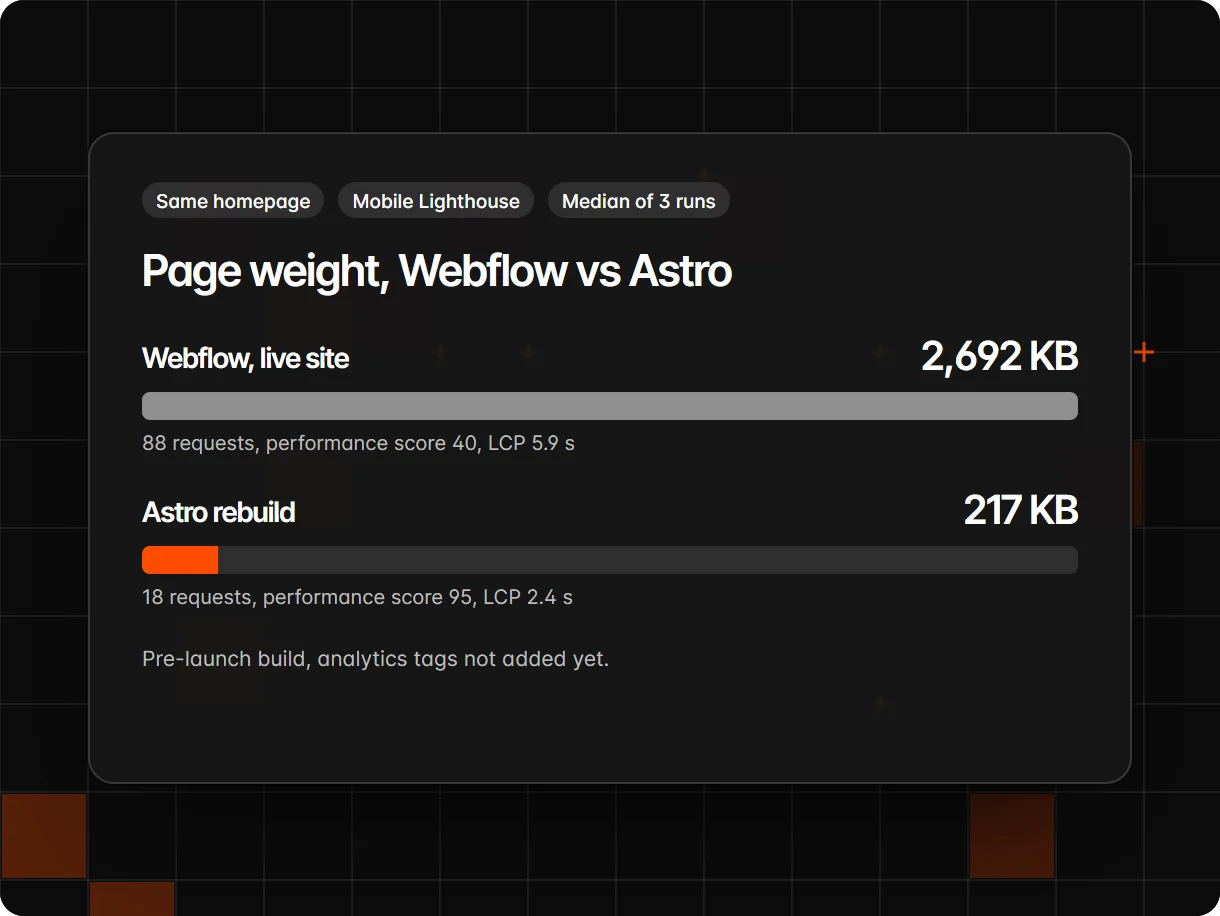
A 155-page education site rebuilt from Webflow on Lumos for Astro, with 144 posts moved and every URL preserved.
Astro Development Services
One team for the build, the migration and everything search needs after launch.
Custom Astro websites
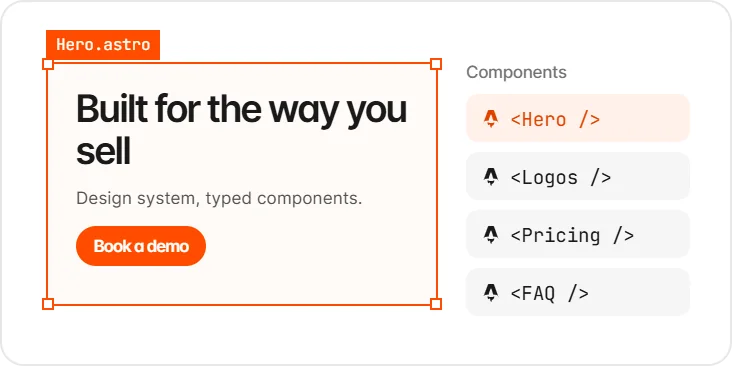
Marketing sites designed in Figma and built on typed Astro components.
WordPress to Astro migration
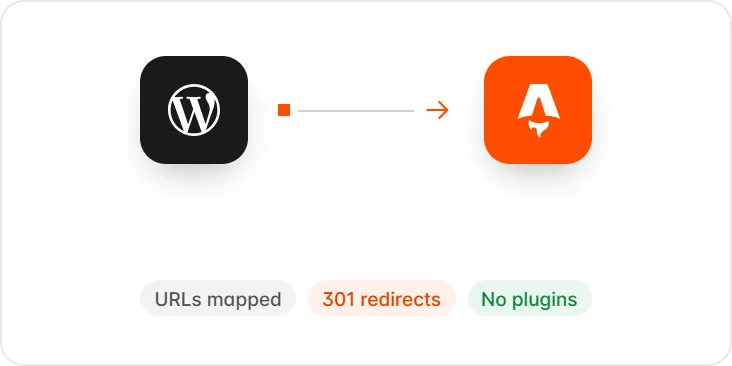
Content, URLs, redirects and metadata moved with a tested cutover plan.
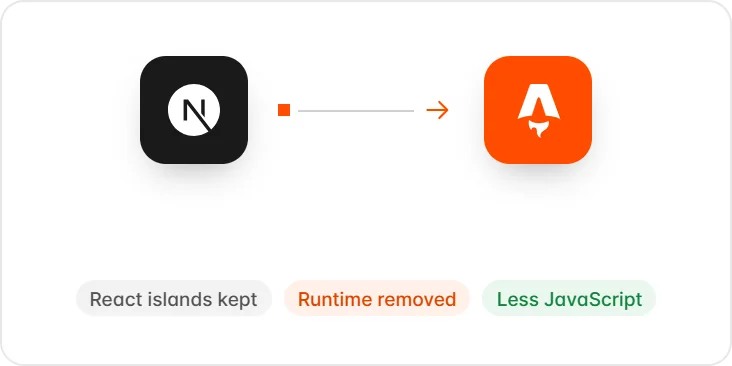
Next.js to Astro migration
Keep your React components as islands and drop the runtime your pages never needed.
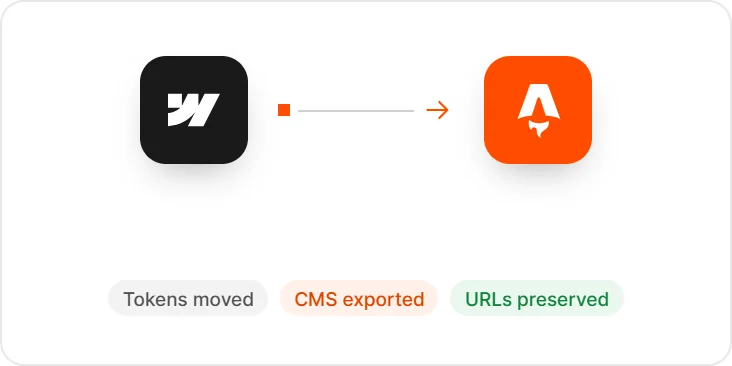
Webflow to Astro migration
Design system, CMS and URLs moved to code when a team outgrows the platform.
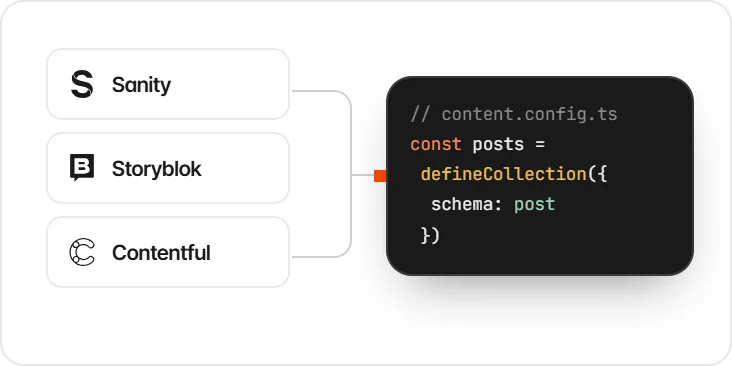
Headless CMS setup
Sanity, Storyblok, Contentful or Stacki Studio wired to typed content collections.
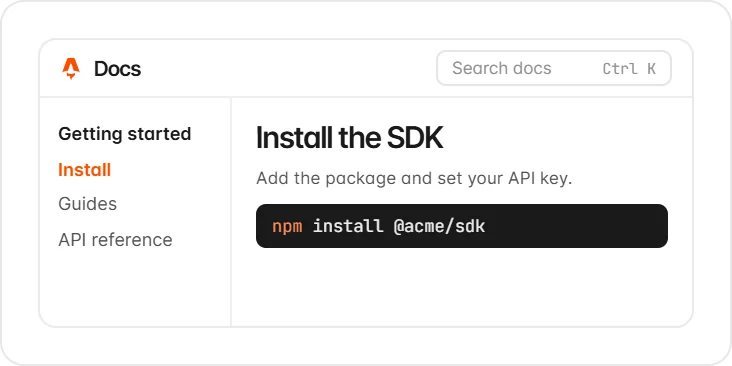
Starlight docs sites
Fast, searchable docs and help centres on Astro's official documentation theme.
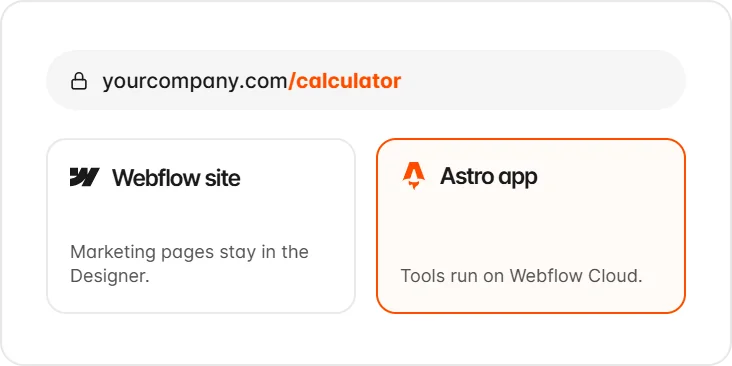
Astro apps on Webflow Cloud
Calculators, AI tools and gated areas on a path of your Webflow site.
SEO and AEO engineering
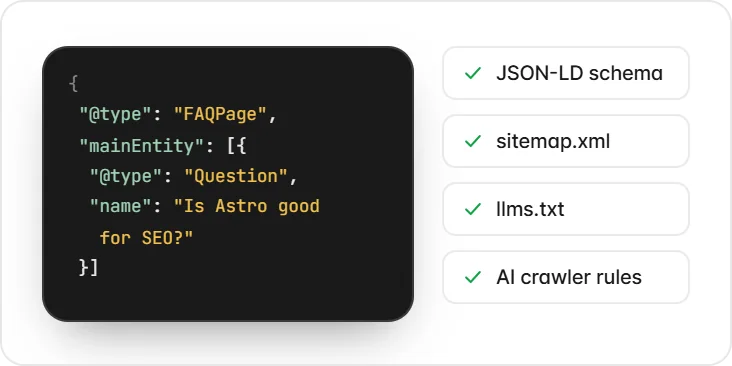
Schema, sitemaps, llms.txt and AI crawler policy built into the templates.
Care and upgrades
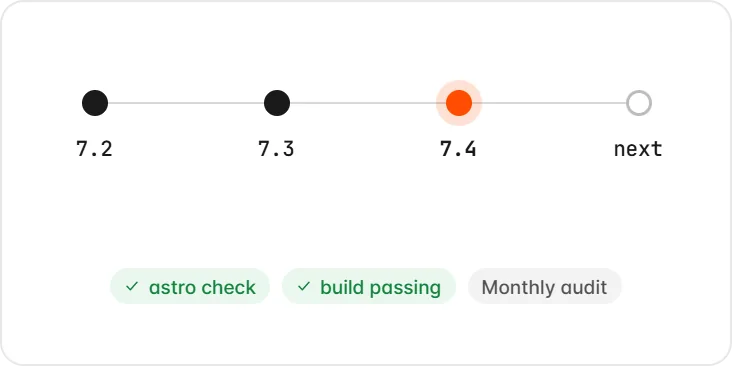
Astro ships a minor release every few weeks. We keep you current and measured.
From First Call to Launch in 6 to 8 Weeks
Seven phases with one accountable partner. You review working pages on a private preview link as they are built, not in a big reveal at the end.
Fit check
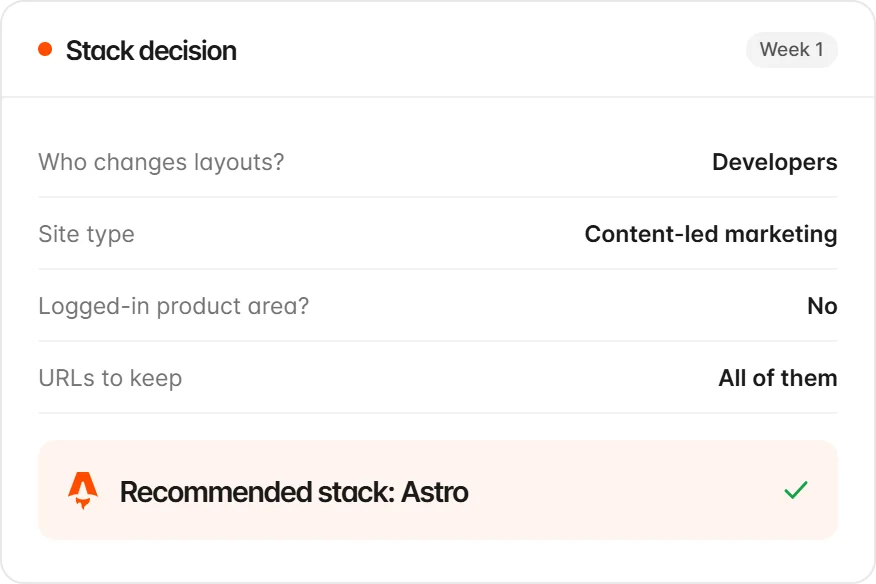
We review your site, traffic and content, then tell you if Astro is the right call. If Webflow fits better, we say so.
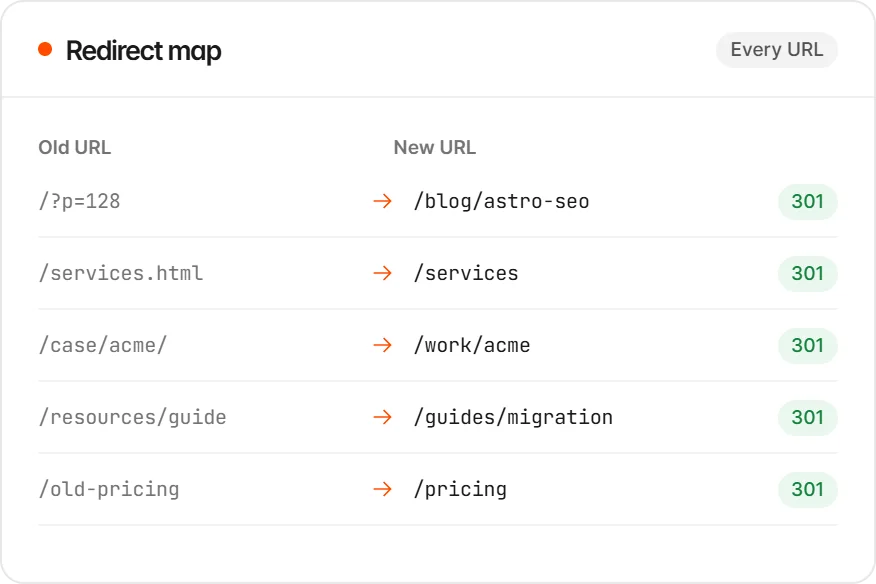
URL and content map
Every URL, redirect and content type gets a destination before any code is written.
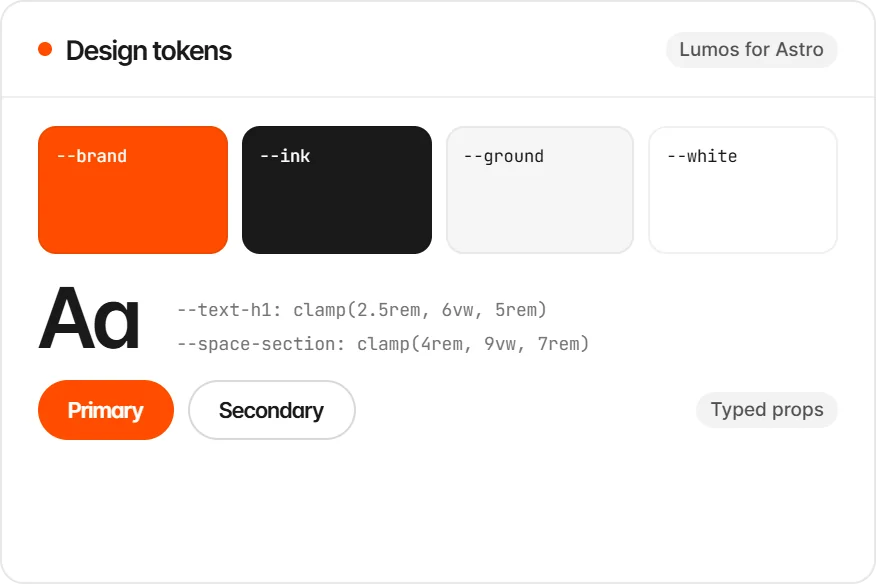
Design system
Figma designs become tokens and typed components, on Lumos for Astro or Tailwind CSS.
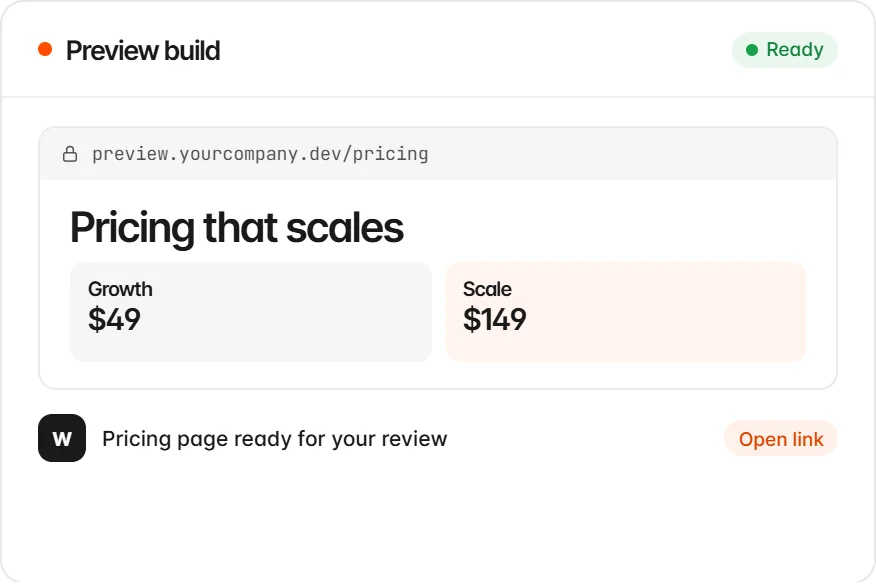
Pages and CMS
We build on a private preview URL and connect the CMS your team will use.
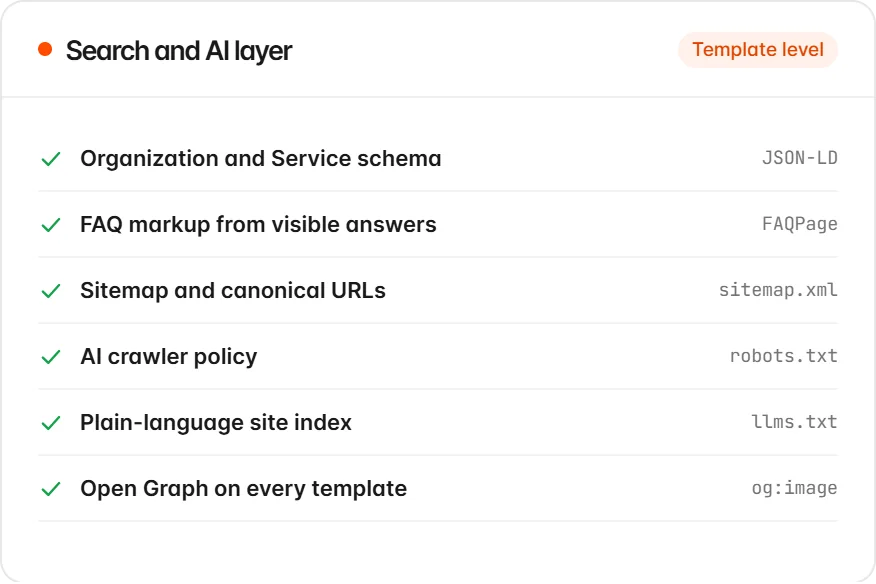
Search and AI layer
Schema, meta, sitemaps, llms.txt and AI crawler rules go in at template level.
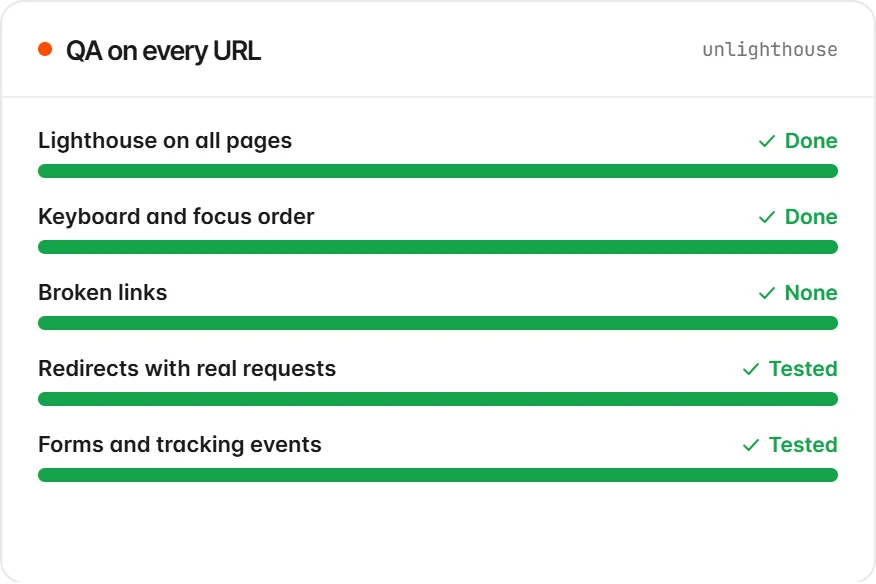
QA across every page
We run Lighthouse on every URL, then test keyboard access, broken links and redirects.
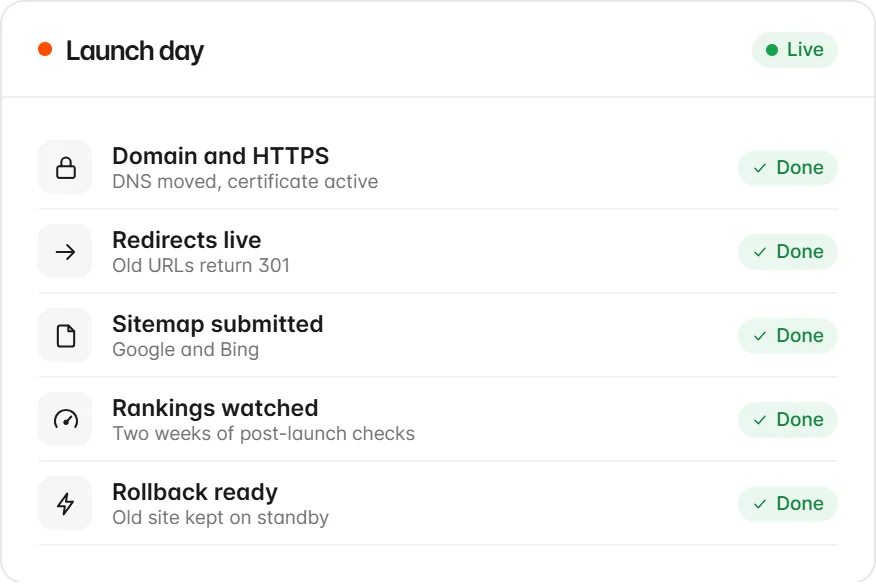
Cutover and care
Redirects are tested with real requests, sitemaps go to Google and Bing, and we watch rankings for two weeks.
Astro vs Webflow vs Next.js: Which Should You Build On?
We build on all three, so we have no reason to oversell one. This is the advice we give on scoping calls.
Astro
Webflow
Next.js
Best for
Content-led sites
Teams that edit visually
Logged-in apps
Host it anywhere
Any Node host
Who changes layouts
Developers
Marketers and designers
Developers
No JavaScript by default
Platform scripts
Mix React, Vue and Svelte
Code in your own repo
Yes
Skip it if
Marketers must edit layouts
You need full code control
Your site is mostly content
The Astro Stack We Build On
These are our defaults. We change any layer your team already runs on, and every account stays in your name.
Framework: Astro 7
Typed content collections catch a broken field at build time, before it reaches a live page.
Design system: Lumos for Astro
Tokens and typed components built from your brand, so new pages stay consistent without a designer.
CMS: headless, your choice
We choose by who edits and how often, then set up previews so marketers can publish on their own.
Hosting: a CDN in your name
Static pages on a global CDN. Webflow Cloud fits when your main site stays on Webflow.
Islands: React first
Existing React components can move across. Only the widgets that need JavaScript load it.
Measurement: live before launch
Analytics and Search Console run before launch, so you can compare traffic and rankings with the old site.
What our clients said about us

00:00
/
00:00

00:00
/
00:00

00:00
/
00:00


Our happy clients
Hear from clients who’ve experienced remarkable transformations with Webyansh.
"Working with Divyansh has been a great experience. We were in a very bad shape with our Webflow for a year, Divyansh came and completely revamped our website. This has helped us in significantly improving our deal flow. If you want to actually improve your website conversion sign them up and don’t think twice."

Webyansh delivered an aesthetic website that was easy to navigate. The team was receptive, systematic, and flexible throughout the process. Moreover, they consistently delivered on time and never compromised on the quality of their outputs.

Project was delivered according to expectations. Webyansh brought his own ideas and research to the table, which was a bonus.

"Amazing work, great communicator, white glove customer service. I would recommend Divyash to anyone looking for premium website development. His easy to work with demeanor and competitive pricing made it a simple choice to use his services again on my new upcoming project."

We had a fantastic experience working with Webyansh and Divyansh Agarwal to build the website for Futurence and many other landing pages that we do. One thing that I really like about him is that he's 24-7 working. When he's working, he's critiquing his own work. He's looking at the competition. He's someone who's thinking three, four steps ahead. So as a business owner, I have to think less about my work because I know someone like Divyansh, someone like Webyansh is my partner. And I would highly, highly recommend everyone for all of their website needs to talk to Divyansh.

"Working with Divyansh on my Action Health Hub website was a fantastic experience. In the beginning of the engagement, he shared the right references that actually sparked my creativity.
His knowledge of Webflow and third party tool integration is just top notch, but what stood out most was his professionalism. He's a great communicator. I'm truly happy with how the concept turned into a polished, powerful product for my company."

“Divyansh has built 3 websites for me across multiple brands. He has an excellent knowledge of Webflow and delivers projects in a timely manner”

"Mahojin's landing page work was completed with a sense of responsibility despite the tight timeline and demanding requirements. He successfully directed the design, 3D work, and development, and communicated responsively with us as the client, which allowed us to successfully launch the landing page on time."

"We recently engaged Divyansh to migrate our website to Webflow, he was responsive and worked hard to get everything over the line. The final result is a functional and visually clean site with improved responsiveness and SEO, and we appreciate the effort that went into making the transition as smooth as possible. Overall, we’re happy to have made the move."

"I had the pleasure of working with Divyansh on our website revamp project at Hopstack, and I can confidently say that he is exceptional at what he does. His design thinking is top-notch, allowing us to achieve a clean, modern, and highly functional website. "

We brought Divyansh on board to help redesign Terra's landing page for a major event, and he absolutely delivered. Throughout the process, he patiently worked through multiple design iterations with us, yet managed to complete the entire redesign and launch in less than a week. What really impressed me was his availability - even during late hours when we needed urgent fixes, he was there to help, making sure everything stayed on track and issues were resolved quickly."

"We’re happy to have collaborated with Divyansh for our website needs. His responsiveness, flexibility and timeliness made it feel like a natural extension of the team. He actively contributed to the ideation, design, and the development phases of the project.His proficiency and expertise in Webflow enabled us to implement an improved version of the website."

"I highly recommend Divyansh for any web development projects, as he consistently demonstrates exceptional technical skills and a strong work ethic.I engaged him on a critical project for our company ShopBox as we were transitioning to a new platform. He definitely showcased his expertise in modern web technologies and frameworks."

"I highly recommend Divyansh as a website developer. His exceptional design and development skills, attention to detail, and ability to create user-friendly websites make him a valuable asset to any marketing team. If you're looking for a reliable developer to bring your web projects to life, Divyansh is the one to pick."

"Div is a brilliant mind to work with. His expertise and experience in Web designing is very creative.I worked with Div for over a month on my company's Web design and he reported on time aswel as with new ideas flowing through that made my day easier. Looking forward to work with him again on future projects."

"He's a wonderful individual, very highly recommendable professional. One more important thing I would like to quote is he was very much proactive in regards to his workflow. We already had a website which was on WordPress. The transformation from the old to new was amazing and I would really highly recommend everyone to take the services of Webyansh. I am sure you will not be disappointed."

Tell Us What You Want to Move to Astro
Send your URL. We will come back with a stack recommendation, a rough scope and a price. If Astro is the wrong call, we will say so.

Hi, I’m Divyansh - Founder at Webyansh. Schedule a call with me to discuss in detail about your project and how we can help your business. You can also request for free custom quote if the scope of work is clear.
Astro Development FAQs
Straight answers to what buyers ask before hiring an Astro agency.

Still have questions?
Book a call with our friendly team to get all your questions and queries answered.
What does an Astro development agency do?
An Astro development agency designs, builds and migrates websites on the Astro framework. Webyansh handles the whole job: design system, components, CMS, hosting, redirects, SEO and AEO. One senior partner stays accountable from the first call to launch.
Is Astro good for SEO?
Yes, when the build is done well. Astro sends finished HTML, so search engines can read your content without running JavaScript. Astro sites had a median Lighthouse SEO score of 100 on mobile in the HTTP Archive Technology Report for September 2026. Rankings still depend on content, links and site structure.
Does Astro help you get cited by ChatGPT and other AI engines?
It removes a technical barrier. Vercel and MERJ reported in December 2024 that major AI crawlers, including GPTBot and ClaudeBot, fetch pages but do not run JavaScript. Astro puts your copy in the HTML, so those crawlers can read it. Citations still depend on clear answers, authority and brand signals.
Astro vs Next.js: which should we choose?
Choose Astro for content-led sites and Next.js for logged-in products with heavy client state. A SaaS team can use both: Astro for marketing and Next.js for the app. In September 2026, 71% of Astro sites passed Core Web Vitals on mobile, against 36% of Next.js sites, according to HTTP Archive.
Astro vs Webflow: which is better for a marketing site?
Choose Webflow if marketers need to build and change layouts visually. Choose Astro if developers own the site and you want full control of code, hosting and page weight. Both pass Core Web Vitals at about 71% on mobile, so speed alone should not decide it. We build on both.
Can our marketing team edit an Astro site without a developer?
Yes. We connect a headless CMS such as Sanity, Storyblok or Contentful, or Stacki Studio for visual editing, so your team can publish posts and edit pages with previews. Layout changes beyond the agreed blocks usually need a developer. That is the main trade-off against Webflow.
Can you migrate WordPress, Webflow or Next.js to Astro without losing rankings?
We protect rankings with a full URL map, one-to-one redirects, and matched metadata and structured data. We test redirects with real requests and watch Search Console after launch. No honest agency can guarantee rankings. The plan removes the avoidable risks: missed redirects, lost metadata and broken forms.
How much does Astro development cost?
Webyansh Astro builds start from $4,000. Most B2B marketing sites cost more, depending on page count, CMS and migration scope. You get a fixed quote before work starts. Payment is 50% upfront and 50% at launch.
How long does an Astro website take to build?
Most marketing sites take 6 to 8 weeks from signed scope to launch. A small site can move faster. A large migration takes longer because every URL, redirect and content type needs a home first.
Is Astro a safe long-term choice after the Cloudflare acquisition?
Cloudflare announced on 16 January 2026 that the Astro team was joining it and that Astro would remain open source. The framework is MIT licensed and still deploys to other hosts, including Vercel and Netlify. Your code stays portable either way.
When is Astro the wrong choice?
Skip Astro if your marketers must change layouts on their own, if your product is a logged-in app with heavy client state, or if your site already passes Core Web Vitals and your team ships quickly. In those cases, Webflow or Next.js is usually the better call.
Who owns the code and accounts after launch?
You do. The repository, hosting account, CMS and domain stay in your name, and we join as invited members. Astro is MIT licensed, so you can move to another team or host at any time.
Why is webyansh.com built on Webflow?
Because we edit it visually all the time, and Webflow suits that. We apply the same test to your site. We recommend Astro when developers own the site and code control matters more than visual editing.
More on Stacks, SEO and AI Search
Guides from our own work on choosing a stack, ranking and getting cited by AI engines.