Summarise this article using AI





Webflow development cost for a B2B SaaS company in 2026 runs $15,000–$60,000 for a custom marketing site from a specialist agency. Freelancers and India-based studios build similar scope for $3,000–$15,000, and enterprise programmes with localization, CRM integrations and large migrations run $80,000–$250,000 or more. Webflow itself adds $25–$39 a month per site before seats and add-ons.
We build and maintain these sites for SaaS teams in India, the US, the UK and the EU as a Certified Webflow Partner, and we publish our own rates, so the numbers below are the ones we quote against rather than a survey of other people's blogs.
You'll also get the post-May-2026 Webflow bill (most cost guides are still quoting plans that no longer exist), a template-level hours model you can use to sanity-check any proposal, US vs Europe vs India rates, the AI-search line item nobody else prices, and break-even math a finance lead will accept.
How much does a Webflow website cost for a SaaS company? The 2026 ranges by stage
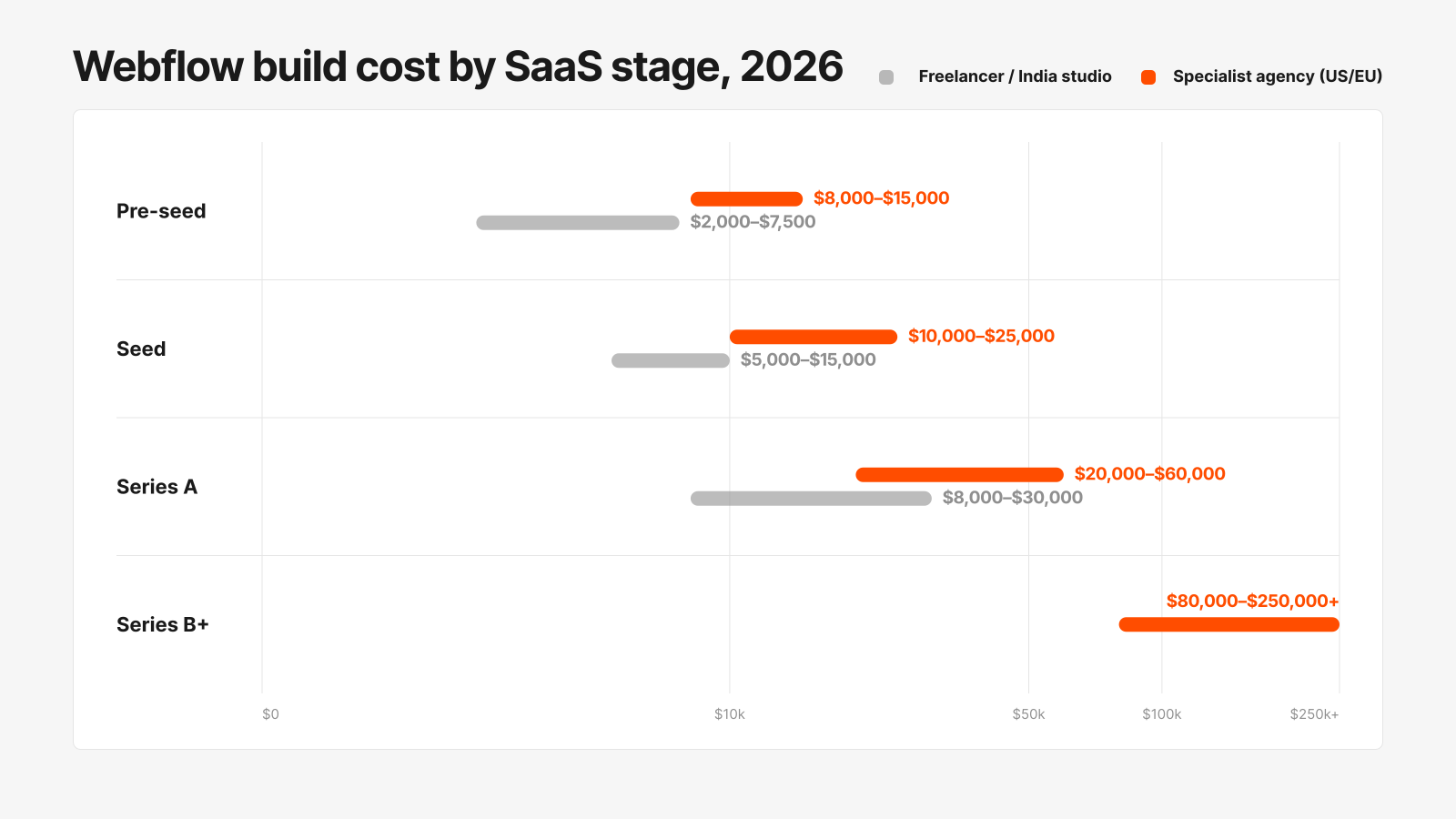
For a B2B SaaS marketing site in 2026, budget $3,000–$10,000 pre-seed, $10,000–$25,000 at seed, $20,000–$60,000 at Series A and $80,000–$250,000+ from Series B onward. Those bands line up across the published 2026 rate cards from Amply, LoudFace and DesignMe, and with what we see in our own proposals.
Sources for the agency column: Amply's by-stage table (pre-seed $3,000–$10,000, seed $10,000–$25,000, Series A $20,000–$50,000, Series B+ $50,000–$120,000, enterprise $100,000–$250,000+), LoudFace's tiers (seed to Series A $10,000–$35,000, Series A to B $30,000–$80,000, Series B+ $80,000–$250,000+) and DesignMe's $20,000–$50,000 for a funded SaaS build. The freelancer and India column combines ColorWhistle's May 2026 India vs USA guide (Indian freelancers $1,000–$2,500, premium Indian agencies $7,500–$18,000+) with Gapsy's Asia rate band of $25–$45 an hour applied to its own hours-by-tier figures, then roughly doubled to cover design and strategy. Our custom projects start at $3,000.
Notice the spread inside a single stage. A Series A site can be $20,000 or $60,000 from two equally competent teams, and the difference is almost never Webflow skill. It's what's bundled: strategy workshops, copy, QA across five breakpoints, project management, accessibility, a redirect map. Gapsy makes the same point from the agency side, and we'd push it further.
Our view: a seed-stage company spending $50,000 on a marketing site is usually buying an agency's process, not pipeline. Spend it at Series A, when you have a pricing page worth testing and a sales team that needs the comparison pages.
What Webflow itself costs after the May 2026 pricing change
Webflow replaced its CMS and Business site plans with a single Premium plan on 13 May 2026: $25 a month billed yearly or $39 billed monthly, with 20,000 CMS items and 40 collections. Basic moved to $15 yearly ($25 monthly) with 300 static pages. A new Team plan bundles a site, 10 seats, Localize and Webflow's AEO agents for $2,500 a month on an annual contract, per Webflow's announcement.
That matters because half the "how much does Webflow cost" guides on page one of Google still list CMS at $29 and Business at $49. If a proposal you're reading quotes those, the rest of its numbers are probably from 2025 too.
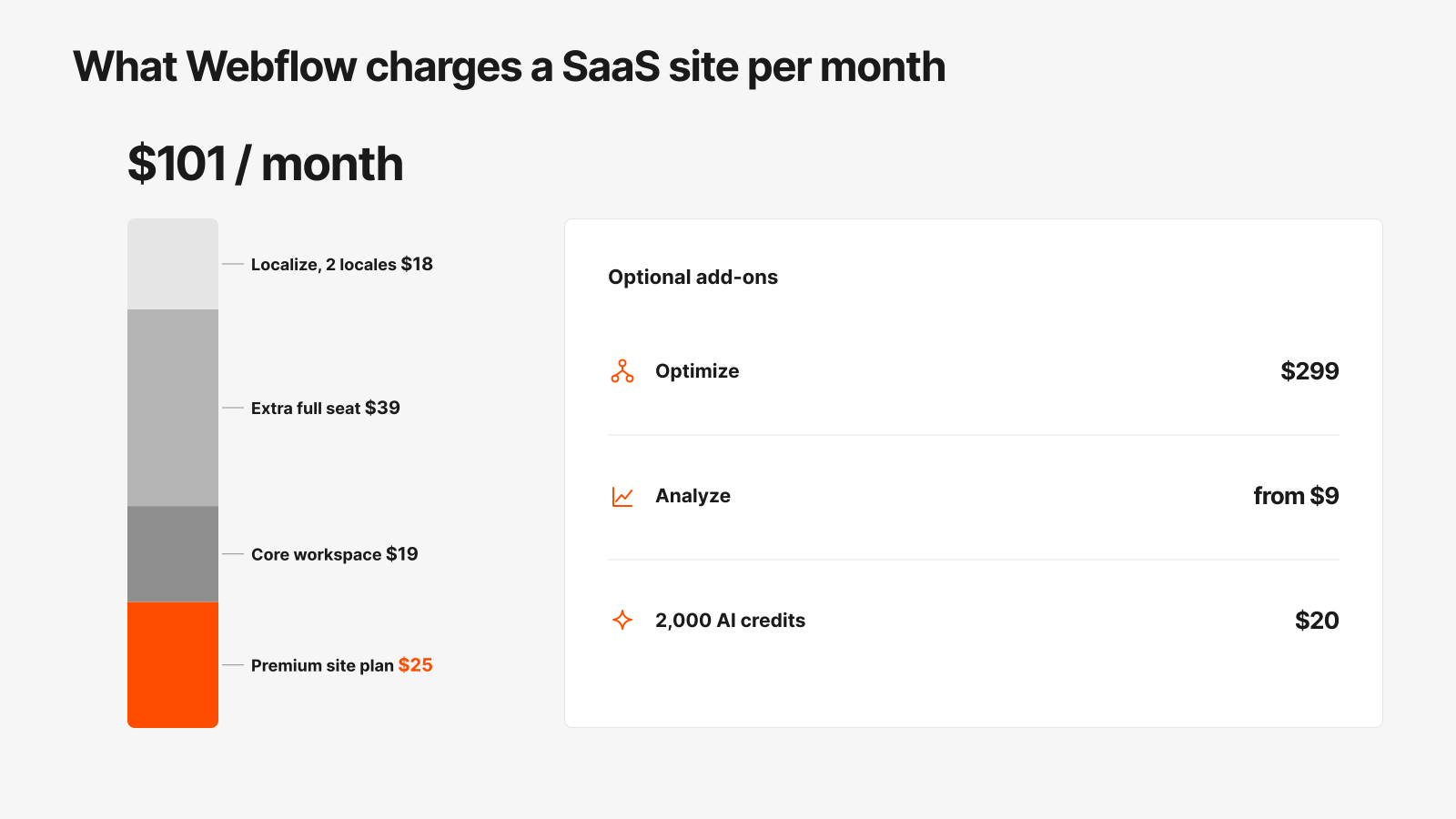
Here's what a typical seed-to-Series-A SaaS site pays Webflow each month, from the live pricing page on 23 August 2026:
Two things to watch.
First, bandwidth. The old Business plan included 100 GB; Premium includes 50 GB, and add-ons run $20 a month per extra 50 GB on yearly billing. Webflow's own help centre worked examples show a Business site using 150 GB going from $59 to $65 a month after the change, while a site under 50 GB saves $10. SaaS sites with video-heavy product pages and a busy blog sit in the "pays more" bucket more often than founders expect. Compress your hero videos.
Second, Enterprise. Webflow doesn't publish it, but Vendr's deal data (132 purchases, updated February 2026) puts the median Webflow contract at $37,900 a year, with a range of $10,000 to $82,148 and buyers negotiating about 14% off. If you're being pushed to Enterprise for SSO or an SLA, that's the number to anchor on. The $2,500-a-month Team plan now covers a lot of what used to force that conversation: page branching, single-page publishing, five full and five limited seats, 100,000 AI credits a year.
Webflow hosting cost is bundled into the site plan, and platform fees are a rounding error next to the build. Over three years, Premium plus a Core workspace is $1,584. We keep a separate guide to Webflow's plans if you need the limit-by-limit detail; the rest of this post is about the part that actually costs money.
Where the money goes in a B2B SaaS Webflow build
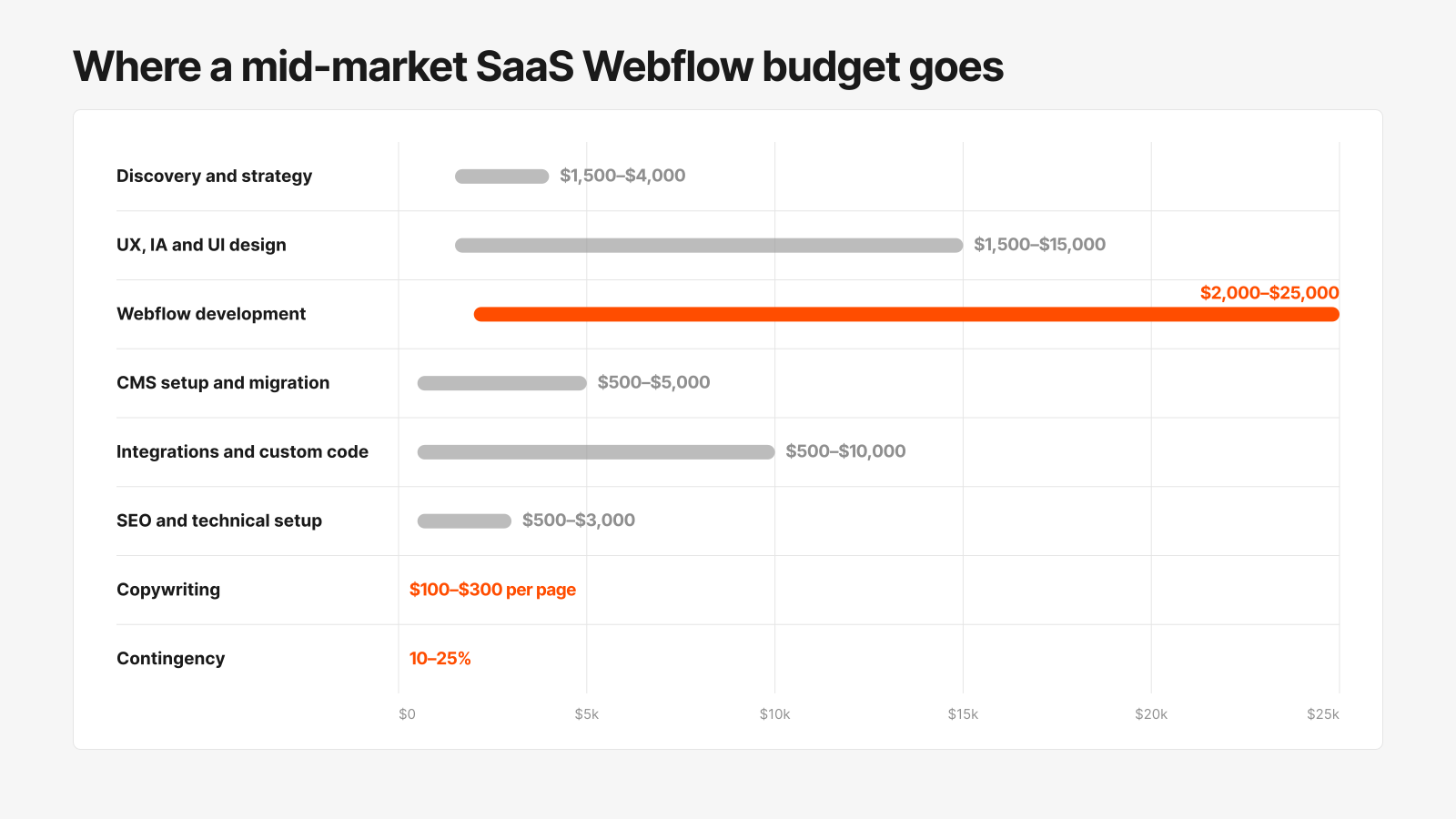
Development is the biggest single line in a Webflow quote but rarely more than 60% of it. Gapsy's planning split for 2026 builds is 60% core build, 15% migration and SEO hygiene, 15% integrations and QA, 10% contingency, and that matches how our own proposals break down once design is included.
The ranges below combine webflow.jobs's March 2026 line items for mid-market builds with Flowout's July 2026 figures for larger SaaS programmes and Amply's cost drivers.
Copy is the line that bites. Most agency quotes assume you'll supply final copy, and most SaaS teams don't have it. Amply prices specialist copy at $300–$800 a page; Flowout quotes $250–$750 for SaaS specialists and $1,500–$3,000+ for complex pages like pricing. On a 20-template site that's $5,000–$15,000 you didn't budget, and it arrives late, which is the other problem. Across our SaaS builds, the schedule slips we see most often come from copy landing after the design is signed off, not from development.
Migration is the second surprise. Moving a 300-URL WordPress blog into Webflow means a redirect map, metadata parity, image re-hosting and a crawl comparison before and after. Gapsy budgets $2,500–$7,500 for SEO migration hygiene and warns of a 20–40% organic traffic drop if it's skipped. We've seen the drop happen to sites that arrived at us after a cheap rebuild, and recovering rankings costs more than the migration would have.
The template count is what actually drives your quote (a model you can check)
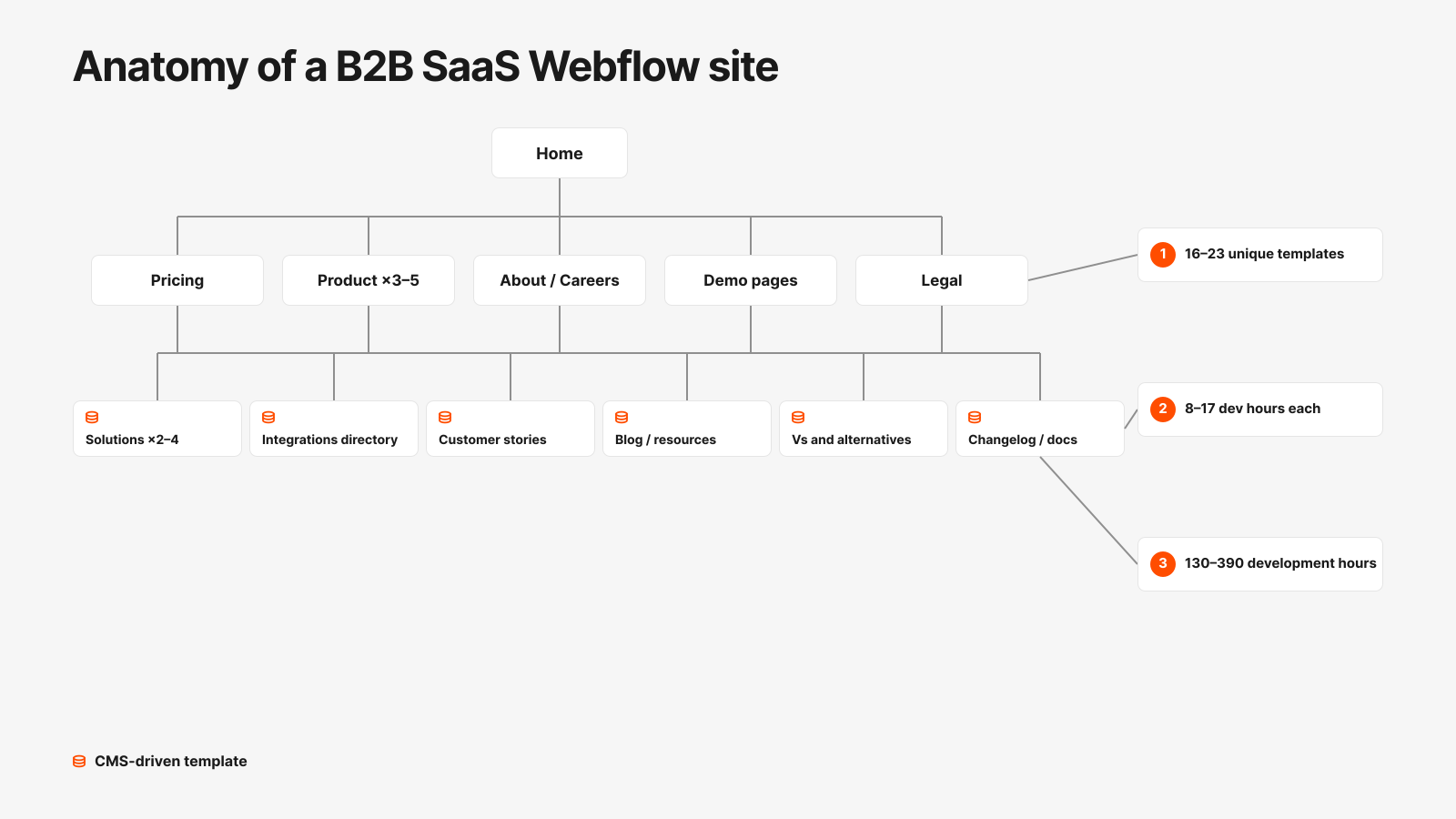
Agencies price unique page templates, not pages. A 60-page site built from 12 templates costs about the same to build as a 15-page site built from 12 templates, because CMS pages reuse one layout. Amply's 2026 rate card puts a template at $800–$2,500 and DesignRush's pricing guide lists $1,500 (templated) to $2,500 (custom) per page, which at US rates of $100–$150 an hour implies roughly 8 to 17 development hours per template.
So count your templates before you ask for quotes. A typical B2B SaaS site in 2026 looks like this:
At 8–17 hours each, that's 130–390 development hours, which is exactly where Gapsy's published tiers land (160–320 hours for a multi-template site, 320–600+ for enterprise scope). Now multiply by a rate. At the $47 an hour effective rate of our 100-hour plan, Webflow developer cost alone is about $6,100–$18,300. At DesignRush's blended US agency rate of $145 an hour, it's $18,900–$56,600. Add design, strategy and QA on top and you've reconstructed the whole $20,000-to-$60,000 Series A band of Webflow development cost from first principles.
That's the check. If a quote is $45,000 for a 10-template site with no migration and no integrations, ask what the hours are. If it's $9,000 for 25 templates plus a Salesforce sync, ask who's doing QA.
We count templates on the first scoping call because it's the one number that predicts the final invoice. (The second-best predictor is how many people have to approve the homepage. Yes, really.)
Agency vs freelancer vs in-house vs India studio: what each really costs
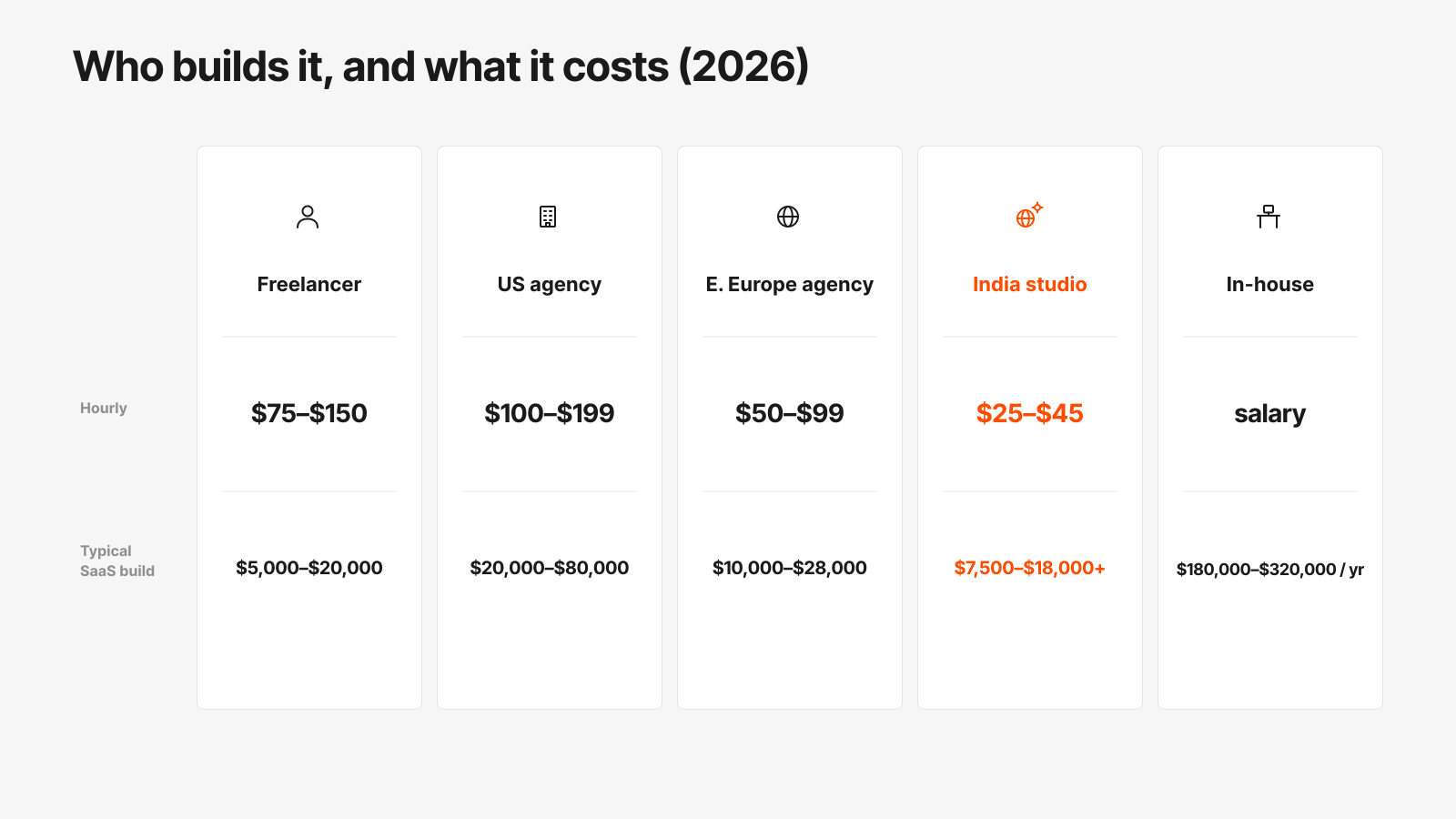
Webflow agency pricing in the US runs $100–$199 an hour on published rate cards, Eastern European studios $50–$99, and Asia-based teams $25–$45. Freelancers sit at $75–$150. Promethean Research's 2026 agency report, built on 1,452 agency leaders, found the single largest band of US digital agencies charging $175–$199 an hour, and only 20% raised rates this year, down from 28% in 2025.
Rate sources: Amply's twelve published agency rate cards and freelancer band, DesignRush's $145 blended rate, Gapsy's regional bands and its Eastern-Europe-rate build estimates, DesignMe's mid-level developer salary and Amply's in-house year-one total. The India build range is ColorWhistle's premium-agency band; our own rates are public.
Here's the part the US-centric guides skip entirely. Every page ranking for this query treats "offshore" as one line in a table, and none of them model how a US SaaS team actually uses an Indian partner in 2026.
The model that works is a split, not a swap. Strategy, messaging and final copy stay with your team or a US/EU partner who knows your buyer. Design, Webflow production, CMS architecture, integrations and the AI-search work go to a senior India team. One person, on either side, owns QA and sign-off. Done that way, a Series A site that would be $45,000 from a US agency lands at roughly half, with the difference funding the retainer that keeps the site improving after launch.
The trap is hiring India for the rate and then getting junior hours. A junior developer who takes 80 hours to build what a senior finishes in 25 isn't cheaper, and the rework shows up in your QA, not theirs. Ask for the names and portfolios of the people doing the work, ask who reviews it, and ask for a Client-First or equivalent class-naming standard in the contract so your next developer can read the build.
And be honest about the overlap. Bengaluru runs 9.5 hours ahead of New York, so without deliberate scheduling the shared window is an hour or two at the end of the Indian day. That's fine for a build with weekly reviews; it's a problem if your marketing lead expects same-hour Slack replies. We schedule reviews for the US morning for exactly that reason. If you want a second opinion on who to work with, we maintain a list of Webflow agencies in India that includes competitors.
Don't pick India to save money on a site you'll then staff with junior hours. Pick it to buy senior hours at a price that lets you keep shipping after launch.
What moves Webflow development cost up or down
Five things move a Webflow quote more than anything else: unique template count, CMS complexity, number of integrations, migration size, and how many people sign off. Page count on its own barely matters. Neither does the platform; a WordPress build of the same scope costs about the same to produce, per webflow.jobs's 2026 comparison, and the difference shows up in maintenance later.
Amply's published cost drivers give you the size of each lever:
- Custom design instead of a template: +$8,000–$30,000
- CMS complexity (relational collections, filtering, conditional visibility): +$2,000–$25,000
- Each integration: +$1,500–$8,000
- Content migration: +$3,000–$40,000, depending on URL count and media
- Localization: +$5,000–$60,000
- Rework contingency: 10–25% of project value
- Rush timelines: Paddle Creative quotes a 20–30% premium for compressed schedules
Website redesign cost for a SaaS company follows the same bands as a new build; what a redesign adds is the migration line, so scrutinise that one first.
Stakeholder count is the quiet one. Gapsy's whole cost article argues that Webflow projects go over budget because decisions arrive late, not because of the platform, and that matches our experience. Three reviewers with contradictory feedback on the homepage can add a revision round that costs more than the pricing page.
What brings a quote down is less glamorous:
- Final copy before design starts (see the copy line above)
- A finished Figma file. The r/webflow consensus for a dev-only build from a ready design is $1,500–$2,500, and that's a real price, not a lowball
- Templated pages instead of unique ones wherever the buyer won't notice
- A marketplace template ($59–$129 on Webflow's marketplace in August 2026) for pre-seed, then a custom build when the positioning settles
- One decision-maker with named reviewers and a fixed number of rounds
- Phasing: launch the eight templates that drive pipeline, add the docs hub next quarter
One more that's new this year. Webflow's AI site builder has published more than 60,000 sites since launching in February 2025 and now generates multi-page structures with a design system. For a pre-seed landing page it's a legitimate starting point. For a Series A site with a pricing page, an integrations directory and a CRM, it generates the scaffolding and none of the decisions, and the decisions are what you're paying for.
The line item nobody quotes: building a site AI engines will cite
A 2026 B2B SaaS site has to be readable by ChatGPT, Perplexity, Gemini and Google's AI Mode, not only by Googlebot, and that work belongs in the build quote. 6sense's 2025 Buyer Experience Report, based on more than 4,000 buyers, found 94% used LLMs to summarise reviews or analyse data during research, and 94% of buying groups had ranked a preferred vendor before first contact. They bought that vendor 77% of the time.
So the shortlist is built before your SDR gets an email, and increasingly it's built inside an AI answer. None of the pages ranking for Webflow development cost price this. Not one.
The traffic economics have moved too. Ahrefs' February 2026 update across 300,000 keywords found a Google AI Overview now correlates with a 58% lower click-through rate for the top organic result, up from 34.5% in its April 2025 study. The visits that do arrive from AI engines are worth more: Semrush's July 2025 study measured the average AI-search visitor at 4.4 times the value of an organic-search visitor on conversion rate, and Seer Interactive's single-client case (one site, seven months) saw ChatGPT referrals convert at 15.9% against 1.76% for Google organic. One site isn't a benchmark, but the direction is consistent everywhere we've looked, including our own clients.
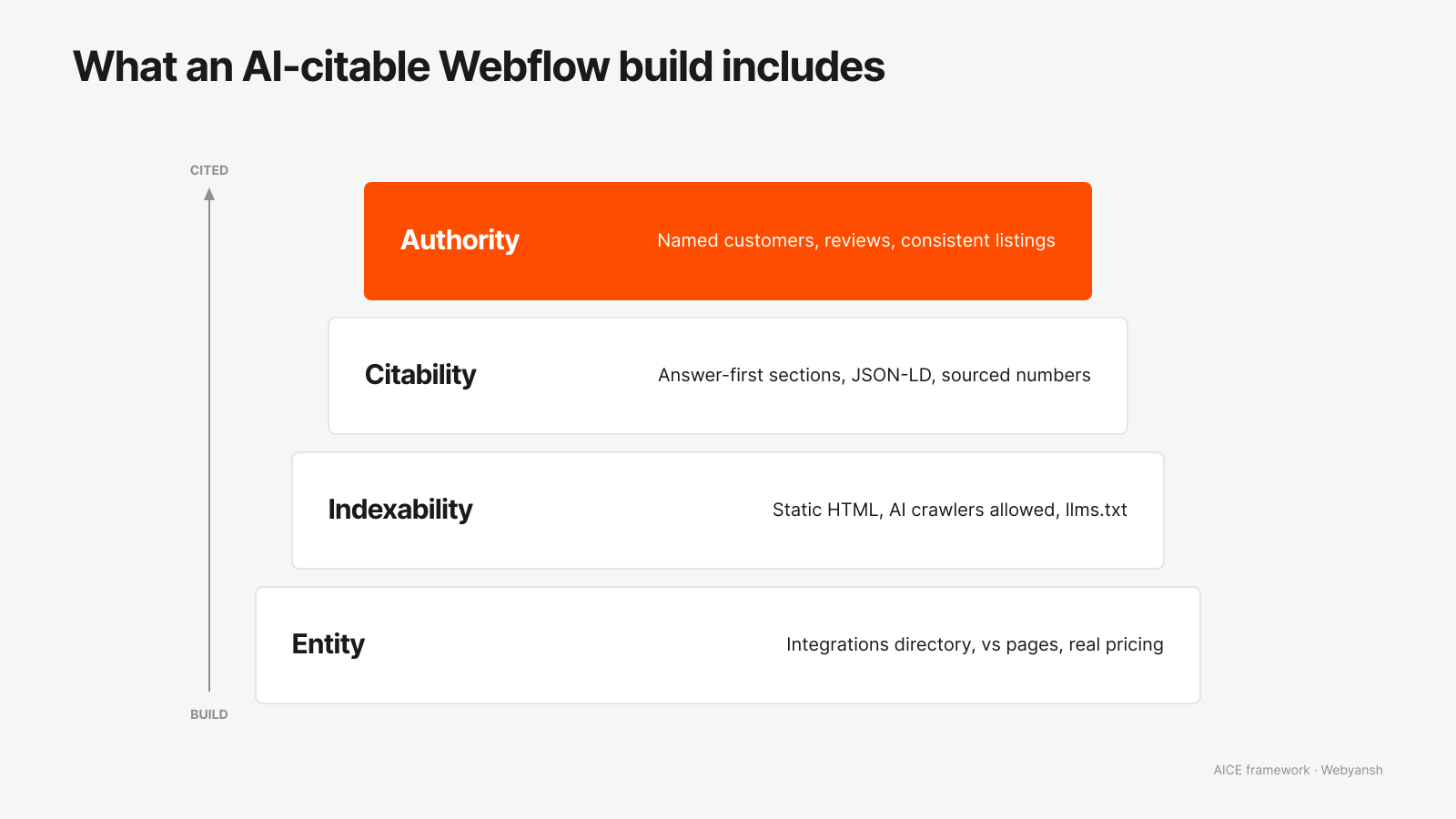
In build terms, "AI-citable" means a specific list of work, most of which is cheap if it's scoped at the start and expensive if it's retrofitted:
- Answer-first page sections: the first 40–60 words under each H2 on pricing, product and comparison pages state the fact an engine would quote
- Structured data in JSON-LD (Organization, SoftwareApplication, FAQPage, Article, BreadcrumbList) in the site's custom code, or generated by the AEO agents Webflow now ships on the Team plan
- Entity-complete pages: an integrations directory, "vs" and alternatives pages, and a pricing page with real numbers, because engines cite pages that name things precisely
- Crawl access for GPTBot, ClaudeBot, PerplexityBot and Google-Extended in robots.txt, plus an llms.txt that points to your canonical pages
- Static, fast HTML. Webflow publishes plain HTML pages, which is one reason we recommend it for this; a JavaScript-only site can be invisible to several of these crawlers
- A citability pass on copy: specific claims with numbers and sources, not "industry-leading"
- Authority signals the engines already trust: named customers, review-site profiles, and the same company name, address and founders everywhere you're listed
We run this under our AICE framework (Authority, Indexability, Citability, Entity) and treat it as a line item, not a post-launch add-on. On Propel's rebuild that work moved conversion rate up 27% and AI visibility up 27% over the same period. [CONFIRM WITH DIVYANSH: what an AEO scope typically adds to a Webyansh build, as a % of the build or a $ range, so this section can state a price]. Budget it the way you budget SEO setup, and ask any agency you're evaluating how they'd make your pricing page quotable by Perplexity. Most won't have an answer. Our answer engine optimization service page explains what ours is.
Ongoing costs: what a Webflow site costs per year after launch
After launch, a B2B SaaS site on Webflow costs about $1,200–$3,000 a year in platform fees for a typical setup, plus $2,000–$15,000 a month if you keep an agency retainer. Maintenance-only retainers start around $2,000 for 20 hours. The site plan is the smallest number on the invoice.
Webflow development cost doesn't stop at launch. Published retainer pricing in 2026:
Then there's the tool stack around Webflow. Gapsy's 2026 estimate for a mid-market site's "hidden" subscriptions (auth like Memberstack, filtering like Jetboost, translation like Weglot, consent and analytics) is $150–$450 a month beyond hosting. Some of that is now redundant: Premium's 20,000 CMS items remove the old item add-ons, Localize covers most translation needs at $9–$29 a locale, and Webflow's own site search and Analyze add-on replace two more subscriptions.
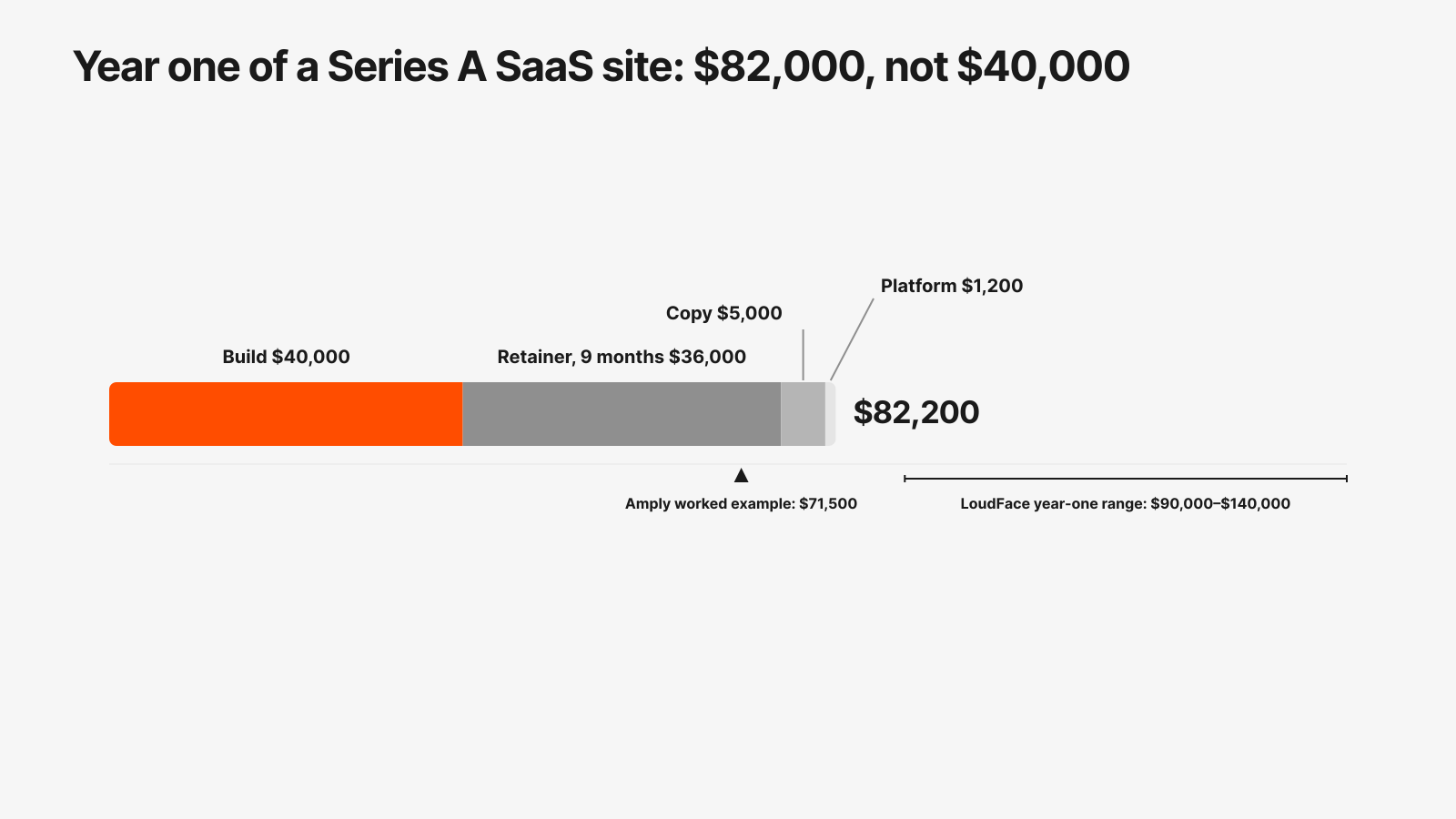
A realistic year-one total for a Series A company looks like this: a $40,000 build (midpoint of the agency band), $1,200 in platform fees, $5,000 of copy, and nine months of a $4,000 retainer at $36,000. Call it $82,000 before contingency. Amply's own worked example for a mid-tier B2B build comes to $71,500. LoudFace puts seed-to-Series-A year-one totals at $90,000–$140,000 with a retainer. If your board hears "$40,000 website" and your finance model says $40,000, you've under-budgeted by half.
Skipping the retainer doesn't save that money. It moves the cost to a site that launches and then sits there while the pricing changes, the product ships three features and the comparison pages go stale. That's the expensive option.
Will it pay back? Break-even math your finance lead will accept
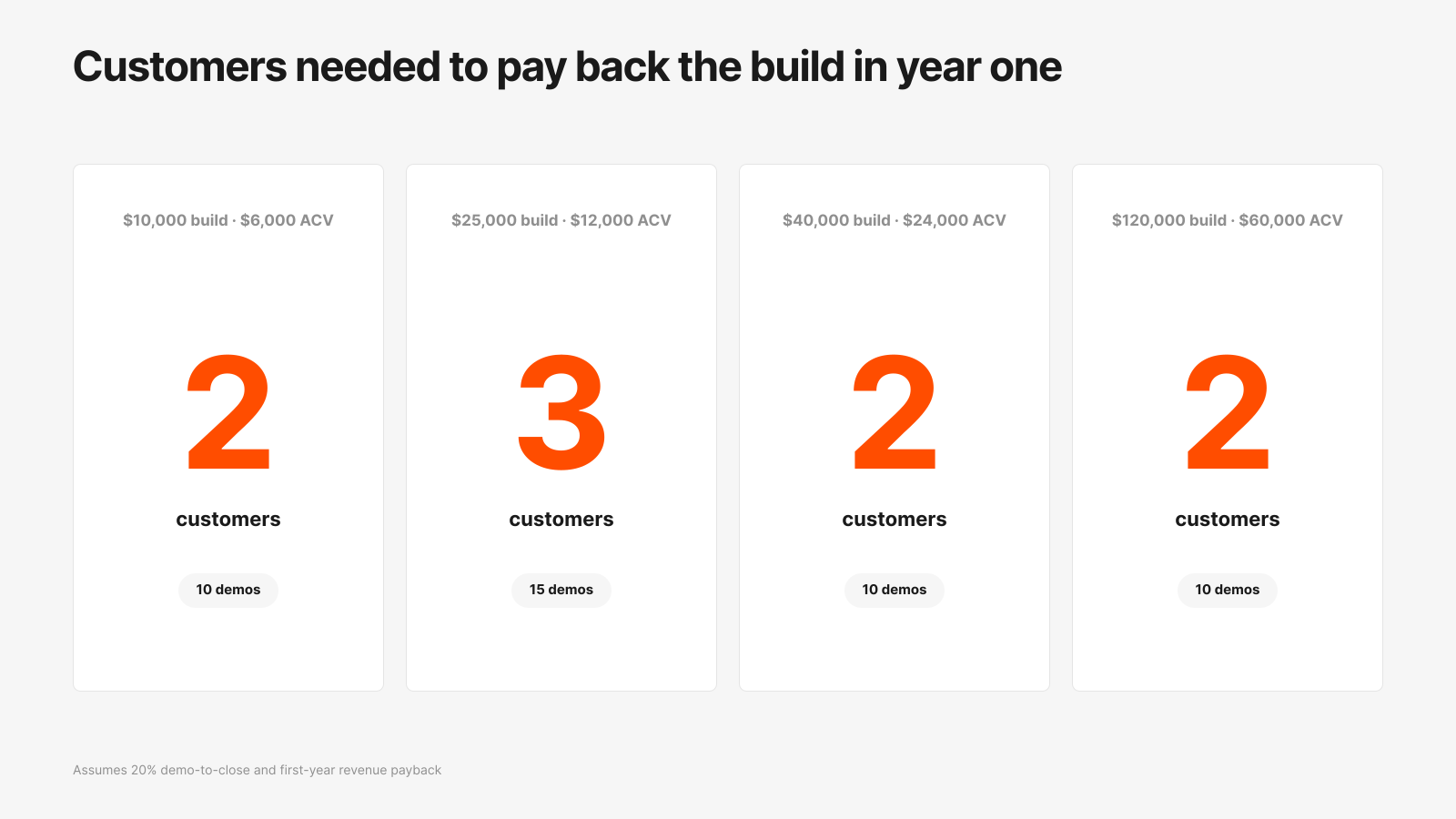
A $40,000 Webflow build pays for itself with two new customers at a $24,000 ACV. Unbounce's benchmark report puts the median SaaS landing page at a 3.8% conversion rate against 6.6% across all industries, so the realistic lever is moving that number, not doubling traffic.
Here's the arithmetic with the assumptions stated. Customers needed is build cost divided by ACV (first-year revenue payback, ignoring margin and churn). Demos needed assumes one in five demos closes, which you should replace with your own rate.
TABLE 7 goes here. Delete this paragraph and insert a Custom code embed with the contents of webflow/embeds/table-7.html (4 columns × 4 rows, section: Will it pay back? Break-even math your finance lead will accept).
At a 3.8% visitor-to-demo rate, 10 extra demos a year is roughly 260 extra qualified visitors. Or, on a site that already sends 2,000 visitors a year to its demo page, it's the same traffic converting at 4.3% instead of 3.8%. That second path is the one a rebuild actually controls.
Our own numbers say it's achievable. Futurense's rebuild took PageSpeed from 39 to 92 and the site now converts at 27% (case study); Propel's conversion rate rose 27%; Aureon Solutions onboarded 200+ high-net-worth clients at a 24.3% conversion rate. GoFIGR went from a PageSpeed score of 52 to 88 and went on to raise $2.8M; Hopstack's organic traffic rose 266% and the company raised $2.7M. Those aren't all marketing-site conversion rates and we don't claim they are, but speed and structure move the number, every time, and they're line items you can see in the quote.
Where the math stops working: a $120,000 programme for a $6,000 ACV product with 40 customers. Then you need 20 new logos from the website alone in year one, and you'd be better served by a $25,000 build and $95,000 of demand generation.
Which budget tier should you choose? A decision tree
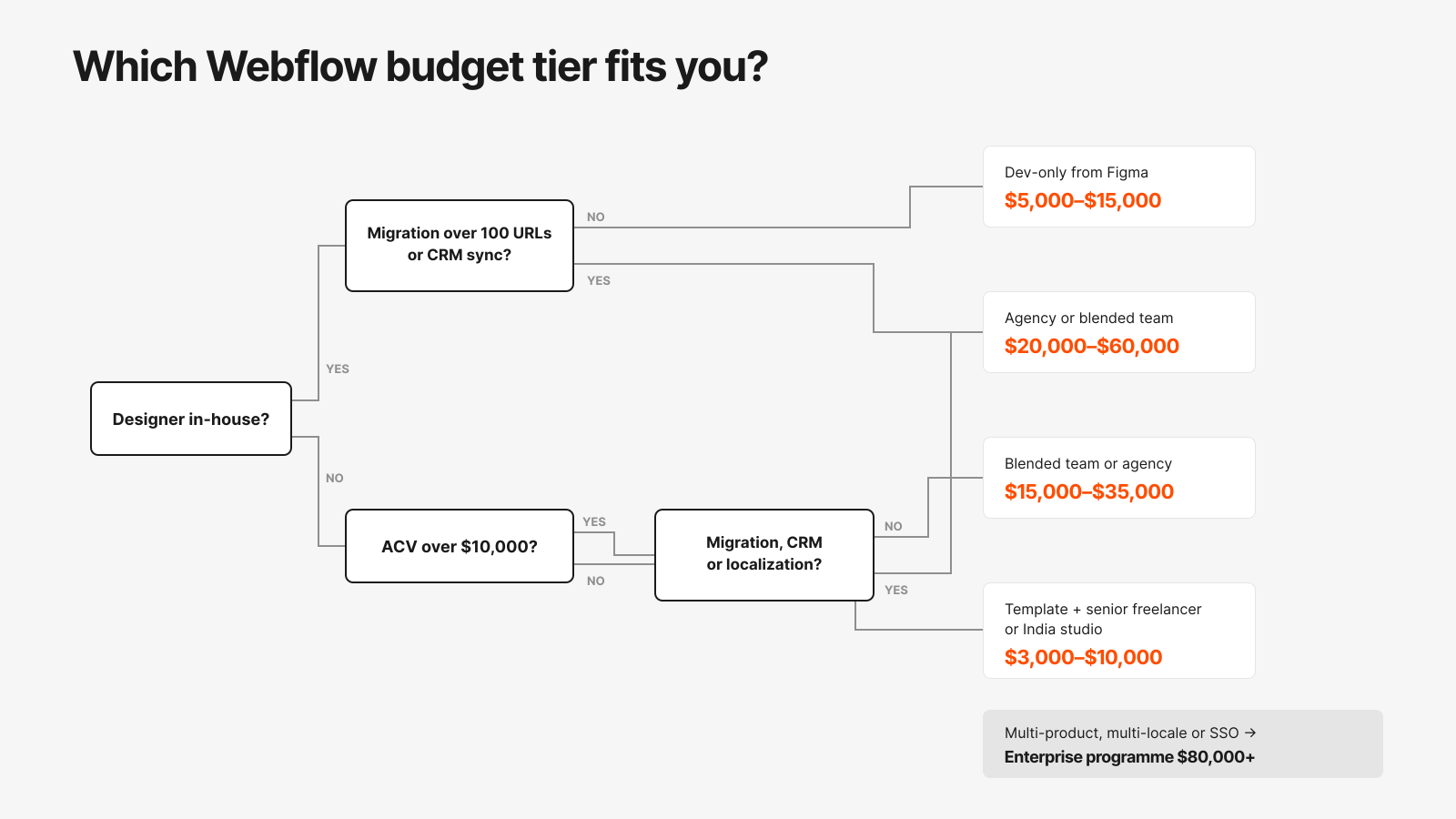
Pick the tier with three questions: do you have a designer in-house, is your ACV above $10,000, and are you migrating more than 100 URLs. Three noes means a template plus a senior freelancer or India studio at $3,000–$10,000. Yes to ACV and migration means a specialist agency or blended team at $20,000–$60,000. Multi-product, multi-locale or compliance requirements put you in the $80,000+ programme regardless of stage.
The branches in prose:
- No designer, ACV under $10,000, fewer than 100 URLs. Buy a $59–$129 template, have a senior freelancer or India studio customise it, write the copy yourself. $3,000–$10,000. Revisit in 12 months.
- No designer, ACV over $10,000. You need custom design and a pricing page that can be tested. Blended team or specialist agency, $15,000–$35,000, with the AI-citability work scoped in.
- Designer in-house, migration under 100 URLs. Dev-only engagement from your Figma. $5,000–$15,000 depending on template count. This is the most under-used option.
- Migration over 100 URLs, or HubSpot/Salesforce sync, or localization. Specialist agency or blended team with a named QA owner, $20,000–$60,000, 6–12 weeks.
- Multi-product, multi-locale, SSO or compliance. Enterprise programme, $80,000–$250,000+, and look hard at the $2,500-a-month Team plan before Enterprise.
Whichever branch you're on, read the quote the same way:
- How many unique templates, and which are CMS-driven
- The integration list, by name, with who owns each API key
- Who writes the copy, and what happens to the schedule if it's late
- The redirect map and a before/after crawl as deliverables
- Revision rounds per phase (two for design and one for development is normal)
- A class-naming standard and Figma handoff, so you're not locked to one vendor
- What "AI-ready" means in the scope, in specifics, or whether it's there at all
Before you request quotes at all, run your current site through our free AI Design Scorer and bring the template count to the first call; you'll get tighter numbers and you'll know which of the five branches you're really on.
How much does Webflow cost per month in 2026?
Webflow’s Basic site plan is $15 a month billed yearly ($25 monthly) and Premium is $25 billed yearly ($39 monthly) after the May 2026 change that merged the CMS and Business plans. Workspaces run from free to $49 a month, extra full seats are $39 each, and the Team plan is $2,500 a month on an annual contract.
Is $1,500 a good price for a website?
For a B2B SaaS company, $1,500 buys a customised template or a development-only build from a finished Figma file. It won’t include strategy, custom design, copy or QA. That’s a fair price for a pre-seed landing page; it’s an under-scoped one for anything with a pricing page, CMS and CRM integration.
Is Webflow cheaper than WordPress for a SaaS site?
Build costs are similar for the same scope. Webflow is usually cheaper to run because hosting, security, SSL and updates are included in the $25–$39 monthly plan, while WordPress needs separate hosting, plugin maintenance and developer time. Webflow gets pricier if you stack third-party subscriptions for features a plugin would cover.
How much does a Webflow developer charge per hour?
Freelance Webflow developer hourly rates are $75–$150 in the US and Europe. Specialist US agencies publish $100–$199, Eastern European studios $50–$99, and Asia-based teams $25–$45. Webyansh’s 100-hour monthly plan works out to about $47 an hour with design, SEO and maintenance included.
How much does Webflow Enterprise cost?
Webflow doesn’t publish Enterprise pricing. Vendr’s data from 132 purchases, updated February 2026, shows a median contract of $37,900 a year with a range of $10,000 to $82,148, and buyers negotiating about 14% off. Check whether the $2,500-a-month Team plan covers your needs before committing to Enterprise.