Summarise this article using AI





Answer Engine Optimization (AEO) is the practice of structuring a website so AI systems like ChatGPT, Gemini, Perplexity, and Claude can accurately extract, understand, and cite it in a generated answer. Where traditional SEO optimizes for a ranked position in a list of links, AEO optimizes for something different: getting selected as the source inside the answer itself. Some practitioners call this AIO (AI Optimization) or GEO (Generative Engine Optimization); the terms overlap, and Webflow itself now uses "AEO" as the official name for both the practice and its own built-in tooling.
That last part matters more than it used to. In May 2026, Webflow shipped a native AEO product, AI agents that audit your site and recommend fixes, plus analytics that track how often your brand gets cited. If you're on Webflow, part of this guide is now something the platform can do for you. This guide covers both: what Webflow gives you natively, and the manual implementation work that still applies whether or not you have access to it.
Key Highlights
Webyansh.com firmly believes that Artificial Intelligence Optimization (AIO) is the next evolution of SEO.
Instead of focusing only on ranking in search engines, AIO focuses on getting cited by Large Language Models like ChatGPT, Gemini, Claude, and Perplexity, etc.
That is also how we run our SaaS SEO services: classic rankings and AI citations are planned together, not bolted on afterwards.
- AIO (Artificial Intelligence Optimization) focuses on earning citations from AI models, not just rankings in search engines.
- Large Language Models evaluate context, semantic structure, authority signals, and fact density; not keyword repetition.
- Comprehensive, well-structured long-form content increases the likelihood of AI citation across multi-step conversations.
- Webflow provides strong technical control for AIO through semantic HTML, structured data, clean CMS architecture, and accessibility optimization.
- Schema markup, internal linking, llms.txt implementation, and author signals reinforce AI trust.
- AIO success is measured through AI referral traffic, AI Overview impressions, and citation testing across LLM platforms.
- Websites that optimize for both SEO and AIO will dominate visibility in the AI-first search landscape.
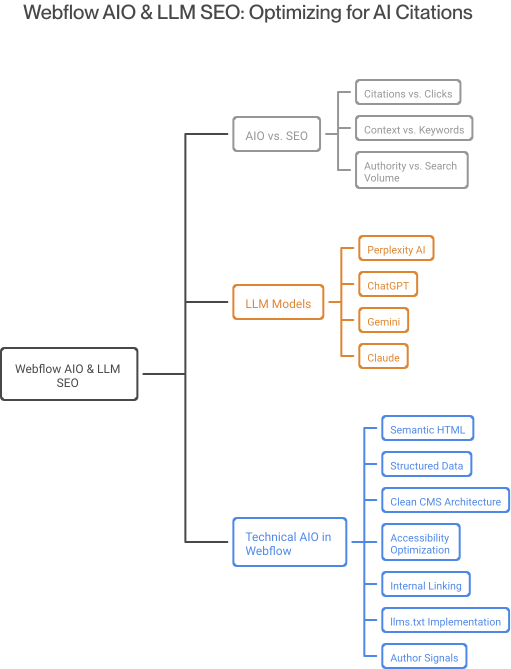
In 2026, the internet had changed completely. Instead of relying on search engines, users are using AI models for even simple queries.
Earlier, internet usage was simple: head over to Google or any other search engine, type your search, and boom, you would have a list of websites where you could find your answers.
But now everything has changed; LLMs are becoming common even to regular users.
As a website owner, you need to focus on how to rank on LLMs and not just search engines. And that’s when AIO comes into focus.
AIO stands for Artificial Intelligence Optimization. While the traditional SEO (Search Engine Optimization) focuses on ranking your content/website on search engines, AIO focuses on AI, citing your website in their answers.
Simply put, it's an AI ranking.
But how to perform AIO?
In this article, you will learn the differences between SEO and AIO, step-by-step implementation of AI, content structure, and every other technicality to help you get started.
So, whether you are a content marketer, SEO specialist, or web developer, this guide will help you out.
What is AIO?
Let me explain to you AIO in layman's terms. LLMs like ChatGPT use data on the internet to train themselves and give you answers.
For example, in ChatGPT, you type ‘Best Exercises for Shoulder Muscle Stiffness,’ and ChatGPT will look on the internet and compile an answer that answers your query.
They will also cite your website for the information they took as a credible source.
AIO focuses on how to get LLM models like ChatGPT to cite your website/content.
While in traditional SEO, the focus was to rank on search engines, getting the website to the top for more clicks.
In AIO, the focus is on getting LLMs to trust your content as a credible source of information.
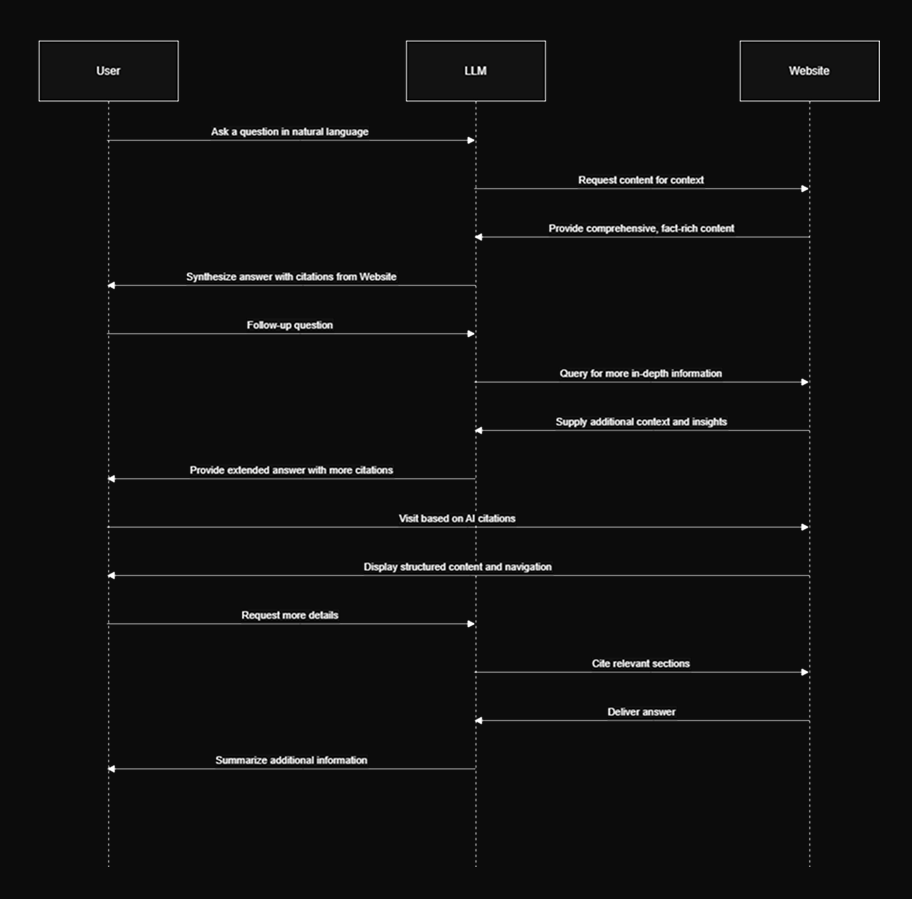
Core Differences Between AIO and SEO
Large language models train on the open web, then generate answers by synthesizing what they've learned, citing sources they judge credible along the way. Ask ChatGPT "best exercises for shoulder stiffness," for example, and it doesn't just link out. It compiles an answer and, where it's confident in a source, cites it directly.
AEO is the discipline of getting your content selected for that citation. The mechanics overlap heavily with technical SEO and structured data, but the target output is different: a citation, not a click.
| Traditional SEO | AEO | |
|---|---|---|
| Goal | Rank in a list of links | Get cited inside a generated answer |
| Signal LLMs weight | Keyword match, backlinks, search volume | Context, semantic structure, fact density, authority |
| Crawler priority | Keyword placement in headings, intro, meta description | Clear answers, authoritative data, expert attribution |
| Success metric | Rankings, clicks, CTR | Citation frequency, AI referral traffic, AI Overview impressions |
Shift from Search Engines to LLMs for Queries
We know the internet has changed now. For years, Google has been the gateway to the internet for most of us.
Since I started using the internet, I have known Google as my gateway to the internet. Whether I have to search a query or a website, I just go to Google and type it.
And it gives results exactly matching the search intent. But things are different now.
AI is everywhere; we have AI chatbots, AI browsers, and even the Google Search results now show Gemini’s response at the top.
The Internet has shifted from search engines to LLMs for Queries.
But this shift changed a lot of things not only for the users but even for website owners, such as-
1. Focus on Thinking
A search engine used to fetch websites through web crawlers. Consider them a library of an unending list of websites.
You search something and you see all the related websites. But that does not mean you get what you're looking for.
You will have to filter out the crap and then get the information you are looking for.
Result? You will end up with multiple tabs opened on your browser and hours wasted on getting something useful.
But LLMs don’t just fetch data. They read the query and think about the user's search intent. They look for related data on the internet and then synthesize the data to present to the users.
If you search for something like ‘How to clean bike chain’, then LLM will show you the complete guide, the tools you will need, and even the best brands to consider for tools.
2. Death of Keywords
Search engines focused on keywords. Content with matching keywords ranked higher. But LLMs are different as they are built on Natural Language Processing.
On a search engine, your query used to be like ‘Best Chain Lubes for Bike’. Websites with matching keywords ranked higher.
But on LLMs, users generally type their queries like this: ‘I have a new BMW G310RR bike, and I am new to bike maintenance.
I am looking for some good chain lubes and cleaners for my bike.
Can you recommend some? User queries are more in natural language, and AI understands the context behind and presents the correct answers.
3. Focus on Authority
With AI, your focus should not be on clicks but on building authority. Let me tell you why. On Google and other search engines, the main focus was getting clicks on the site.
And SEO was successful when the site got more clicks and a higher CTR. But now, users get their answers in one app or page, so clicks aren’t relevant anymore.
While this can be a nightmare for some, if you consider it the other way, it’s a better way to build authority.
Consider it this way, Gemini answers the query and gives a citation like ‘According to XYZ brand.’ This builds an authority for the user, and you will end up getting high-intent traffic on your site.
4. Context Building
LLMs have memory, and users just don’t search for a single query. They will continue chatting with the chatbot until their query is completely satisfied.
For instance, the user's first query is ‘Best shoes for running’, then after this, their second query will be ‘Suggest some tips for running as a beginner’, and they will continue with their conversation.
Now, a simple blog post won’t suffice to solve all these queries. If your blog just focuses on ‘Best Shoes for running’, then for the new query, LLM will look for any other source for answer generation.
But if you have a complete guide on running that answers every question, then LLMs will keep citing your content throughout the conversation.
Top LLMs and How They Show Content
There are many LLMs in the market, but currently, the AI world is dominated by four models- Perplexity AI, Google Gemini, ChatGPT, and Claude.
Let’s see how they get content, and how you can optimize your Webflow site for them.
1. Perplexity AI
Perplexity is the pure answer engine. It searches the internet for the data; it’s just a replacement for traditional search.
In fact, this is one of the most citation-heavy platforms till now. For every source, they give a clickable link, and each paragraph in the answer is cited.
If you want to focus on getting citations on Perplexity, then your content must be specific to users’ intent.
Not only this, but your site must be niche to a particular topic. You need to focus on diving deep into the topic and present methodologies within your content.
Also, you must focus on community content like Quora and Reddit, as Perplexity takes a lot of data from these forums.
2. ChatGPT
ChatGPT is one of the most commonly used LLM models. ChatGPT answers user queries like an essay or a direct conversation. It uses superscript numbers with site links for citation.
If you want AIO for ChatGPT, then you must focus on depth and comprehensiveness in your content.
ChatGPT doesn’t consider small blog posts a reliable source of data.
For instance, content with 1000 words or fewer is useless for ChatGPT, as most of the queries for the topic aren’t covered in a smaller blog post.
It looks for long-form content with 2000+ words that covers the topic in every aspect possible.
3. Gemini
Gemini is Google's AI model. In fact, it’s integrated right at the top of the Google Search with the name ‘AI Overviews.’
Whenever you search a query on Google, at the top, it will show Gemini’s answer. In the chat interface, it shows source carousels, link chips, and drop-down arrows for source citations.
Gemini seeks data from the official domain. It uses a blog post as a source when the content is well-structured and has clean semantic HTML. It also looks for Google Business Profile if you are marketing your brand’s website.
4. Claude
Claude by Anthropic is well known for its deep thinking. It can create a whole e-book or a guide if you ask it to.
It focuses less on citation of the content, instead, more on synthesizing information based on the data it is trained on.
But whenever it cites a source, it is done as a reference between the answers.
Claude looks for deep content that answers questions like ‘What’ and ‘Why.’
You are likely to get a citation on Claude if your content is well-written, presents expertise, and is not just fluff. Claude is also one of the first major AI assistants to explicitly support the llms.txt standard.
What's Important in AIO (Keywords vs. Context)
The traditional SEO tactics focus on keywords, but LLMs aren't trained on keywords but on context. This is where the main difference between SEO and AIO begins.
Keywords Paradigm
As we all know, traditional SEO focuses on keyword theory. You put keywords that users are searching for in your content.
You give a structure to your content with a title, headings, and lists. Keywords are spread evenly throughout your content while maintaining the keyword density.
Keywords with high search volume and less competition are used.
They are integrated everywhere, including your headings, introduction paragraphs, alt text, meta description, conclusion, and even in the Q&A section.
Web crawlers then pull your website, and the search engine will rank your website when it matches the user’s search intent.
Context Paradigm
LLMs aren’t trained on keywords; they are trained on natural language. They know how to understand the user’s words and feelings behind them.
Keywords don’t matter for the LLMs. LLMs don’t focus on how often keywords have been included in your content.
Instead, it focuses on what your page is about, its authority, and how well your content is organized.
It focuses on the depth of the content and not just the fluff with content spinning. Content with depth, clear structure, consistency, and natural language patterns.
Technical AIO in Webflow
If you are building your site over Webflow, then it gives you complete control over its underlying code.
Here’s how you can implement the technical AIO in Webflow in six steps:
1. Semantic HTML
A semantic HTML page includes tags like <article>, <section>, <main>, <footer>, and others to tell AI crawlers what each part of the page/content represents.
For AIO, you must have a structured semantic HTML page.
Webflow gives you complete control over it. When you use Webflow designer, every element has a Tag Setting which you can customize.
You can change it to anything like section, article, main, header, etc.
Here’s how you can implement semantic HTML in Webflow-
- Convert the main heading to <h1> and include only one <h1> in the page.
- Use heading levels correctly, like H1->H2->H3.
- To represent important text, you can use the <strong> tag. For text with emphasis, use the <em> tag.
- If you are writing a blog post, then you should write your content within the <article> tag.
2. Structured Data
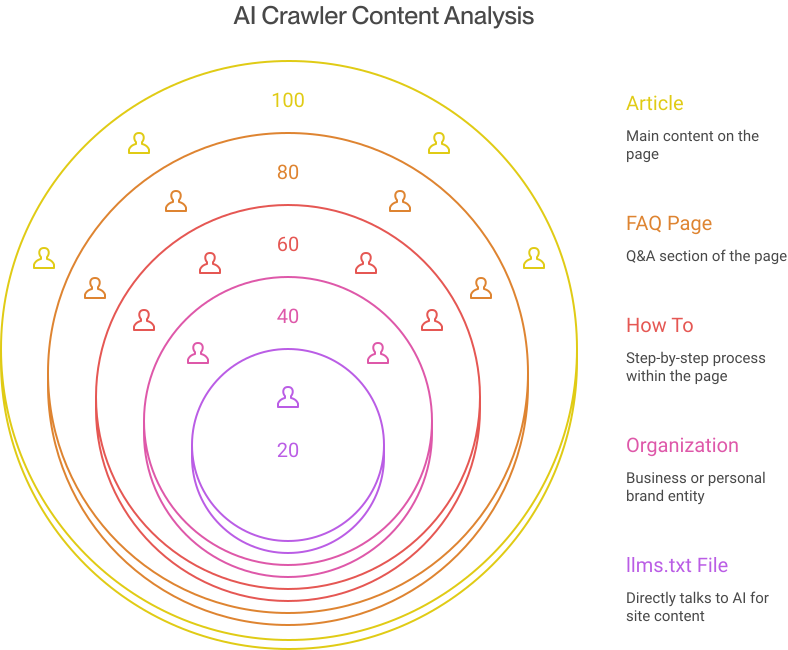
Structured data is likely to be used as a source for AI. LLMs use structured data/schema markup to get entity relationships. Here are some schema types to use for AIO:
- Article: Tells AI crawlers that this is the main content on the page. It includes publish date, headlines, meta description, author name, etc.
- FAQ Page: This tells AI crawlers that this particular part of the page is the Q&A section.
- How To: This indicates a step-by-step process within the page. It can include steps, requirements, and expected outcomes.
- Organization and Person: Establishes your business or personal brand as a recognized entity with consistent attributes.
To implement schema markup in Webflow, you can add a JSON-LD file in the custom code. Here’s how:
- Go to the Page Settings panel.
- In the Head Code section, paste the JSON-LD schema.
Your JSON-LD schema will look something like this-
If you are using Webflow’s CMS for generating pages, then you can use the dynamic embed feature to insert the schema.
3. The llms.txt File
The llms.txt file is present in the root of the domain and is used to directly talk to AI for the site’s content.
This file is designed in such a way to indicate to AI what the page is about, what problem it solves.
When this file is present in the root directory, AI models will know what to expect from the article, what’s in the content, expertise, etc., all in one file.
Here’s what this file includes:
- H1 tag with site/brand name
- Describe what the site is about and who it serves.
- Key links to important pages.
- Additional documentation section.
How to implement the llms.txt file in Webflow?
You cannot directly include a file in the root level in Webflow, as Webflow doesn’t.
However, you can use the custom 301 redirect feature to redirect llms.txt to a Webflow page that is formatted as plain text.
4. Clean Code Export
Webflow allows clean code export with well-structured HTML, CSS, and JavaScript. Webflow gives you more control over technicalities like headers, caching, etc., if you want to self-host the exported site.
Here’s what to consider in the exported code:
- Ensure important content is included in the code. Text and structured data must be available in an HTML file.
- It must have a <link rel = ”preload”>tag for fonts and above-the-fold images.
- You must avoid having hidden behind interactions like tabs, menu and accordions.
- Webflow uses slug-based URLs. Slugs should be descriptive with keywords and canonical tags.
5. Accessibility
AI crawlers need to understand page content through non-visual signals. You may have images and infographics within your content, but your data must be easily understandable without visual focus.
But how? This can be done through proper heading structure, alt text in images, etc.
Here’s how to implement it in Webflow:
- You must add a well-structured alt text to all the images. This should tell what’s in the image and also the keyword.
- Use Webflow's built-in ARIA role settings to properly label custom components like carousels, modals, and dropdown menus.
- Have a proper reading order for the content.
- Include stylings to show interactive elements in the content.
- Add descriptive link text with information on where the link will take you.
6. Internal Linking
Internal linking is a practice in traditional SEO and AIO. With internal linking, you will link one page of your site to another.
AI crawlers use internal links to build a map of your content. The best practice for internal linking in Webflow is:
- The anchor text should be a description and not just ‘Read more.’
- You must connect related topics within the blog post. Don’t include a related topic section separately, but embed links within the blog post.
- URL structures must be consistent throughout the blog post.
- Look for the orphaned pages. If there are no internal links in a page, then that page will be invisible to an AI crawler
Writing Content for AI
In 2026, we are not just writing content for users and search engines, but also for AI.
AI crawlers look for depth in the content. Let’s see what to include in your content for AI citations:
1. The "Inverted Pyramid"
The inverted pyramid structure of the content is all about putting the crucial information of the topic at the beginning.
When writing long-form content, most writers make the mistake of elaborating on the topic and getting to the main crux of the content at the end.
Generally, content begins with an introduction and ends with a conclusion.
But if you are writing for AI, the most important topics and key findings come first. So, how to implement it:
- For every article, put the key takeaways at the beginning. Don’t start with a question.
- Your main subheadings in the content should be placed first.
- Consider your first sentence in the article as the complete summary. Use it to summarize the article and then start with the main content.
2. Q&A Formatting
AI looks for Q&A formatting. Your subheadings should be questions, and the content within them should be answers.
This makes it easier for AI to understand your content and consider it a credible source. But this doesn’t mean your article must be a Q&A section.
Here’s how to implement it:
- Instead of writing like ‘Tips for Webflow SEO’, write it like ‘What are some tips for Webflow SEO’.
- Answers should be concise within the QNA sections. AI should not be digging up the relevant answers within the content.
- You can include a separate Q&A section at the end of the article with all the relevant users' queries answered within.
3. Fact Density & Authorship
As we have discussed earlier, AI focuses on topical depth and fact density. If your content is generic like every other blog post, then to AI it will be just another content piece in the crowd.
To stand out, you need to focus on long-form content with 2000+ words. Apart from content length, your content must be rich in facts, have statistical graphs and infographics, and use data from credible sources.
It should not be a compilation of vague sentences, but should have some authority.
Here are the best practices that you can consider:
- You can include numbers within the content, data, and even name of some entities. By this, I don’t mean flooding your content with it, but including it wherever possible.
- If you are taking your data from somewhere, like statistics, then cite your sources in-line.
- You must keep your facts current and keep updating your content.
- For authority, you can include the author’s bio with professional background and relevant experience. You can link their professional profiles to tell AI that someone experienced in the field writes the content.
- You can follow the E-E-A-T (Experience, Expertise, Authoritativeness, and Trustworthiness) framework for fact density and authorship.
4. Other factors
Apart from these, there are other factors that you must include in your content to get AI to treat it as a credible source.
- Consider having a good readability score. Generally, a 7 readability score is considered the best. This can be maintained by using the active voice throughout your content, keeping your content short, and avoiding using adverbs.
- Avoid using phrases like ‘First of all’, ‘For example’, and such, wherever possible.
- Maintain a structure throughout your blog post. You must have lists, subheadings, tables, and every other element necessary to maintain the structure of the content.
Future-Proofing & Measurement
This part of the content focuses on how you can measure the success of AIO, and also how you can future-proof your website.
How to Measure Success?
For traditional SEO, you can use SEO tools like Semrush and Ahrefs to track the success. But it’s relatively difficult to track AIO's success rate.
But there are some indicators that you can look for in the traffic to see whether AIO is successful or not.
1. Look for Referral Traffic: AI cites your content, and when the user clicks on the citation link, they are redirected to your website.
It is considered a referral. In your analytics tool, look for referrals from domains like chatgpt.com, preplexity.ai, claude.ai, etc.
If you get traffic from these domains, then this means AI is citing your content for reference.
2. Google Search Console AI Overviews: Google is rolling out granular data for AI overviews. In your Google Search Console, find impressions and clicks.
If your long tail keywords have higher impressions but low clicks, then this means your site is powering an AI overview.
3. Manually Search Through LLMs: You can manually type your keywords as a query in the AI chatbots and look whether they cite your content or not.
You can do this by typing all the possible user queries as natural language.
Do this once a month and check if your content is being cited or not. It’s a hit-and-miss model to test AIO's success, but you can go for it.
4. Use Tools for AIO Tracking: There are tools in the market, like Brandwatch and Mention, that enable you to track the performance of your AIO.
These tools let you track whether your website is being used in AI-generated responses or not.
Voice Search & Multimodal
The future of AI is not just text-based queries.
LLMs are shifting towards video, voice search, and images for search queries, and you need to future-proof your AIO tactics for that so that you aren’t dead in just a few months.
1. Voice Search
Voice search through an AI model is pretty common now. They are usually longer than text-based queries.
While the text query can be something like ‘ Webflow AIO tips,’ when users go through voice search, their query will generally be like ‘Hey, what are the most important technical things I need to change on my Webflow site to get cited by ChatGPT?’
So, how to optimize your content for voice search? Here are some tips that you can consider-
- User's natural language within the content. Your content must not look formal or have a formal tone.
- You must target long-tail keywords more as the subheadings.
- Your site must be fast. A slow site isn’t likely to get cited in voice search.
2. Multimodal AI
AI models are now capable of generating videos, audio, and images. They aren’t just limited to text anymore.
They can even analyze content with multimedia and present it within the answers.
Here’s what you can do:
- Include alt text in images with image information and the user’s query.
- Include infographics and diagrams with descriptive texts.
- Audio must be easily understandable within the content.
- For video content, there must be transcriptions in your video.
Conclusion
When writing content or building a website, your focus should not just be on users and search engines, but also on how you can get AI to cite your website.
With LLMs gaining popularity, users are less likely to use search engines for their day-to-day searches.
Focusing just on traditional SEO means the death of your website. You need to focus on AIO along with SEO in the long run.
Well, if you go for Webflow, then you need not worry about any technicalities. Webflow provides powerful tools to handle most AIO techniques with ease.
It provides semantic HTML output, custom code injection, clean CMS architecture, author profile, and more for easy AIO implementation.
Start with the technicalities of the AIO, like semantic SEO, structured data, llms.txt file. Prioritize the depth of the content, fact density, and clarity.
Ready to Make Your Webflow Site AI-Visible?
If your website isn’t optimized for AI citations, you’re already losing visibility in 2026’s search landscape.
Webyansh will audit your Webflow site for AIO readiness, from semantic HTML and structured data to content depth and citation strategy.
Book a free AIO consultation and discover exactly how LLMs see your website.
With Webyansh, your site doesn’t just rank on Google; it gets cited by AI too.
What is the difference between SEO and AIO?
SEO focuses on ranking a website higher in search engine results to generate clicks and traffic. AIO focuses on making your website credible and structured enough for AI models to cite it as a trusted source in generated answers. SEO prioritizes keywords and backlinks, while AIO prioritizes context, authority, and semantic clarity.
Does AIO replace SEO?
No. AIO does not replace SEO. Instead, it complements SEO. Traditional search engines still exist, but AI-powered answer engines are becoming a major traffic channel. Websites should optimize for both ranking and citation to remain competitive.
How do LLMs decide which website to cite?
LLMs evaluate several signals, such as: - Contextual depth and topical coverage - Clear semantic HTML structure - Structured data markup - Author credibility and entity recognition - Internal linking and site architecture - Up-to-date and fact-dense content
Is Webflow good for AIO optimization?
Yes. Webflow is great for AIO as it provides: - Semantic HTML control - Custom code injection for structured data - Clean CMS architecture - Accessibility settings - Fast performance
Does word count matter for AI citations?
Word count alone does not guarantee citations. However, comprehensive long-form content often performs better because it covers a topic deeply. AI models prefer structured, fact-rich content that answers multiple related queries in one place.